Parting Stone is one of several thoughtful options families consider after cremation — but it is not the only one, and it is not the right fit for every family. This guide walks through the main alternatives, the trade-offs of each, and how to decide what actually matches your family's situation.
The goal is not to push one choice. The goal is to help you compare urns, keepsake urns, cremation jewelry, scattering, memorial diamonds, garden stones, memory boxes, photo memorials, and solidified remains side by side, calmly and clearly.
Ad · Affiliate
Curious how Parting Stone compares?
Before comparing alternatives, it can help to see what Parting Stone actually delivers. Check the current process, pricing, and turnaround on their site — there is no pressure to decide today.
See How Parting Stone Works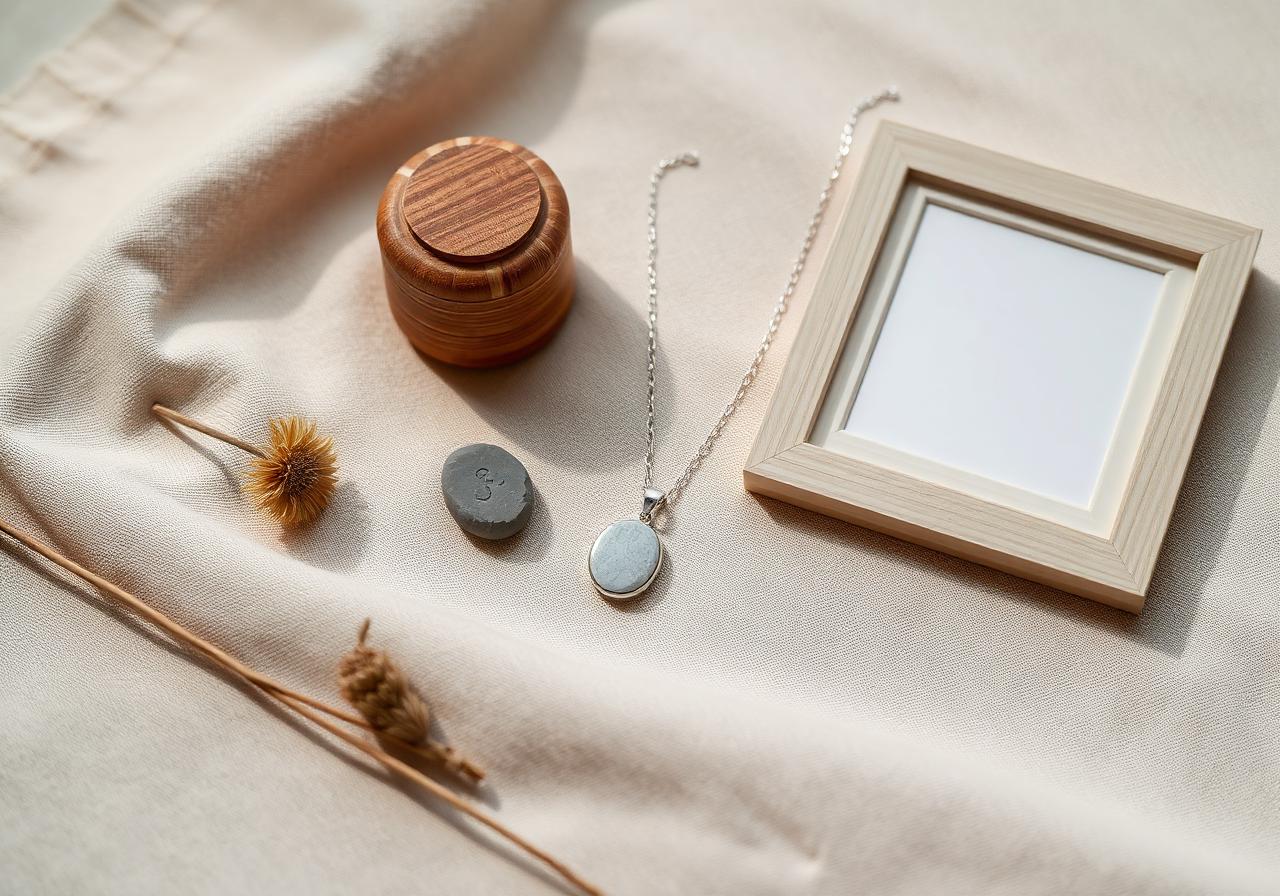
Illustrative image of common cremation memorial options. Confirm current product details directly with each provider.
Quick Answer
What Parting Stone is
A mail-in service that solidifies cremated remains into roughly 40–60 smooth, shareable stones.
Common alternatives
Traditional urns, keepsake urns, cremation jewelry, scattering, memorial diamonds, garden stones, memory boxes, photo memorials.
How to choose
Match the option to budget, family sharing, emotional comfort, tradition, and whether you want to keep, divide, scatter, or transform the remains.
Reminder: confirm current pricing, timing, shipping, eligibility, and service details directly with each provider before ordering.
Ad · Affiliate
Want to see what Parting Stone delivers before comparing alternatives? See How Parting Stone Works →
Best Alternative by Situation
A fast way to narrow the options. Find the situation that sounds most like your family, then explore that path further below.
If…
Multiple family members want keepsakes
ConsiderParting Stone or keepsake urns
If…
Lowest-cost option
ConsiderBasic urn or scattering
If…
Wearable remembrance
ConsiderCremation jewelry
If…
Traditional memorial
ConsiderUrn
If…
Luxury memorial
ConsiderMemorial diamond
If…
Outdoor memorial
ConsiderMemorial garden stone or tree
If…
Not ready to decide
ConsiderMemory box, or keep ashes safely for now
If…
Shareable and touchable memorial
ConsiderParting Stone
Quick Recommendation
- Parting Stone may be a strong choice if the family wants a clean, shareable, touchable alternative to traditional ashes.
- A traditional urn may be better for families who want one central memorial.
- Keepsake urns or jewelry may be better for lower-cost personal keepsakes.
- Scattering may be better if your loved one requested it and the family is ready for a final release.
Ad · Affiliate
If Parting Stone is on your shortlist, see the current process and pricing on their site. See How Parting Stone Works →
What This Guide Covers
- Best alternative by situation
- Which option should you avoid?
- What is Parting Stone?
- Best Parting Stone alternatives
- Side-by-side comparison table
- Parting Stone vs traditional urn
- Parting Stone vs cremation jewelry
- Parting Stone vs scattering ashes
- Parting Stone vs memorial diamond
- Which alternative is best for your family?
- Questions to ask before choosing
- Lower-cost alternatives
- Premium alternatives
- FAQ
What Is Parting Stone?
Parting Stone is a service that transforms the full volume of cremated remains into roughly 40 to 60 smooth, solidified stones. Rather than receiving a sealed urn of ashes, families receive a presentation container of touchable stones that can be held, shared with relatives, displayed, or placed in meaningful locations.
It tends to appeal to families who find loose ashes in an urn emotionally difficult, who have several relatives who each want a tangible keepsake, or who want a calmer, more shareable form of remembrance. For a deeper look, see our Parting Stone review, the dedicated Parting Stone cost guide, our Parting Stone complaints and concerns walkthrough, our Parting Stone Shark Tank update, our Parting Stone availability guide, and our solidified remains explainer.
Ad · Affiliate
See what is included in a Parting Stone order today. See How Parting Stone Works →
Best Parting Stone Alternatives
Each option below serves a different emotional and practical need. None is universally "best" — the right one is the one that matches your family's situation and what your loved one would have wanted.
Alternative 1
Traditional urn
Best for: Families who want one central memorial in the home, in a niche, or buried.
- Familiar and widely available
- Keeps all remains together in one place
- Wide range of styles and price points
Drawback: Less shareable across family unless ashes are divided.
Alternative 2
Keepsake urns
Best for: Sharing a small portion of remains across a few relatives alongside a main urn.
- Affordable per piece
- Easy to gift respectfully
- Low decision pressure
Drawback: Each piece holds only a small portion of the remains.
Alternative 3
Cremation jewelry
Best for: A close family member who wants to wear a personal, daily keepsake.
- Discreet and wearable
- Always with you
- Wide range of styles
Drawback: Holds only a tiny portion. Not everyone wants to wear memorial jewelry.
Alternative 4
Scattering ashes
Best for: Families who want a symbolic release in a place that mattered.
- Often the lowest-cost option
- Can be deeply meaningful
- Brings family together for a ceremony
Drawback: Final and intangible afterward. Always check local rules and permissions before scattering.
Alternative 5
Memorial diamond
Best for: Families who want a single heirloom-quality keepsake.
- Highly personal and permanent
- Distinctive heirloom piece
- Long lifespan
Drawback: Usually the most expensive option and uses only a small portion of remains.
Alternative 6
Memorial garden stone or tree
Best for: Families who want a peaceful outdoor place to visit.
- Quiet, ongoing memorial
- Affordable beyond plant or stone cost
- Suits a home garden
Drawback: Location may change with a future move. Plants need care.
Alternative 7
Memory box
Best for: Combining photos, letters, small objects, and meaningful keepsakes.
- Affordable and personal
- Easy to assemble at home
- Can be shared or duplicated
Drawback: Does not directly answer what to do with the cremated remains.
Alternative 8
Photo or video memorial
Best for: Preserving memories, photos, recordings, and family history.
- Focuses on the life lived
- Easy to share with extended family
- Pairs well with any other choice
Drawback: Does not replace the decision about ashes themselves.
Alternative 9
Parting Stone (solidified remains)
Best for: Families who want the full volume of remains transformed into roughly 40–60 shareable, touchable stones.
- Uses 100% of cremated remains
- Highly shareable across relatives
- Tactile, calm, modern alternative to a sealed urn
Drawback: Premium cost compared with a basic urn. Several-week processing. Permanent transformation.
Cremation Memorial Comparison Table
A side-by-side look at the most common cremation memorial options. Cost levels are general industry frames — confirm any specific service price directly with the provider.
| Option | Best for | Cost level | Shareable? | Uses all remains or portion? | Main drawback |
|---|---|---|---|---|---|
| Parting Stone | Shareable, tactile keepsakes | Premium | Yes — ~40–60 stones | All remains | Premium cost; several-week wait; permanent |
| Traditional urn | One central memorial | Low to moderate | Hard — usually one container | All remains | Harder to share across family |
| Keepsake urn | Sharing a small portion across relatives | Low (per piece) | Yes — buy several | Portion only | Holds only a small portion |
| Cremation jewelry | A wearable daily keepsake | Low to moderate | One person at a time | Portion only | Holds only a tiny portion |
| Scattering ashes | A symbolic release in a meaningful place | Low | One-time event | All remains | Final; family must agree; rules apply |
| Memorial diamond | One heirloom-quality keepsake | Very high | One stone; high cost to repeat | Portion only | Highest cost; long lead time |
| Memorial garden / tree | A peaceful outdoor place to visit | Low to moderate | Not portable | Symbolic or none | Tied to a location; needs care |
| Memory box | Combining photos, letters and small items | Low | Yes — easy to duplicate | Symbolic only | Does not address what to do with ashes |
| Photo / video memorial | Preserving stories and family history | Low to moderate | Easily shared | Symbolic only | Separate from the ashes decision |
Cost levels are general comparisons, not guarantees. Always confirm pricing, timing, and inclusions with each provider.
Ad · Affiliate
Comparing options is the most useful step. To anchor the comparison, see the current Parting Stone process and pricing. See How Parting Stone Works →
Parting Stone vs Traditional Urn
This is the most common comparison. A traditional urn is familiar, lower-cost, and keeps everything together — ideal if the plan is a single home placement, a niche, or future burial of ashes. Parting Stone is the better fit when the family wants something tactile, shareable, and easier to divide across relatives without anyone feeling like they received less.
- Choose Parting Stone if: several relatives want a keepsake, the family is uneasy with loose ashes, or you want a calmer alternative to a sealed urn.
- Choose an urn if: tradition matters, budget is the priority, or the plan is to keep all remains together.
For broader cost context, see our cremation vs burial costs guide and the cremation vs burial calculator.
Ad · Affiliate
If a traditional urn is on the table, it can help to compare it side-by-side with what Parting Stone returns. See How Parting Stone Works →
Parting Stone vs Cremation Jewelry
Cremation jewelry typically holds a tiny portion of remains in a pendant or ring — wearable, daily, and personal. Parting Stone uses the full volume of remains and returns roughly 40 to 60 stones, which suits families who want several shareable pieces without anyone needing to wear them. The two are not always either/or — some families pair a single piece of jewelry for one person with stones for the rest of the family.
Parting Stone vs Scattering Ashes
Scattering can feel like a beautiful, symbolic release in a place that mattered — and it is often the lowest-cost option. The trade-off is that it is final and intangible afterward. Parting Stone may appeal to families who want something to keep or share, or who are not yet ready to release all the remains. Always check local rules and permissions before scattering on public or private land you do not own.
Parting Stone vs Memorial Diamond
Memorial diamonds are typically the most expensive cremation memorial option, often costing several thousand dollars per stone, and use only a small portion of remains. They suit families wanting a single luxury heirloom. Parting Stone is generally far less expensive per total package and produces multiple shareable pieces from the full volume — a more practical fit when several relatives want a keepsake.
Which Option Should You Avoid?
There is no single "wrong" answer, but a few patterns tend to lead to regret. Use these as gentle warnings, not rules.
Avoid rushing if family members disagree on the next step. A short pause is almost always better than an irreversible choice.
Avoid scattering if anyone in the family may want a physical keepsake later. Scattering is final.
Avoid memorial diamonds if budget is a real concern. They are usually the most expensive cremation memorial.
Avoid cremation jewelry if no one in the family is comfortable wearing memorial items day to day.
Avoid choosing Parting Stone before confirming current pricing, timing, shipping, and service details directly on their site.
Avoid any option that conflicts with your loved one's wishes, family traditions, or local rules.
Which Alternative Is Best for Your Family?
Choose Parting Stone if…
- Several family members want keepsakes.
- The family is uncomfortable storing loose ashes.
- You want something touchable and portable.
- You want a modern alternative to a sealed urn.
Choose an urn if…
- The family wants one central memorial.
- Tradition is important.
- Budget is a major concern.
- Burial of ashes is part of the plan.
Choose keepsake urns or jewelry if…
- Each person wants a small personal keepsake.
- Lower cost or a wearable option matters.
- Only part of the remains needs to be divided.
- An urn already covers the main memorial.
Choose scattering if…
- Your loved one specifically requested it.
- The family wants a symbolic release.
- Everyone agrees on the location and timing.
- Local rules allow it where you plan to scatter.
Choose a memory box or photo memorial if…
- You want to preserve stories, letters, and photos.
- You are not ready to decide what to do with ashes.
- The family lives far apart and needs something easy to share.
- You want a memorial that focuses on the life lived.
Take more time if…
- The family disagrees on the next step.
- Grief still feels too acute to decide.
- You want to compare prices carefully first.
- You are waiting on a memorial date or service.
Questions to Ask Before Choosing
A short checklist to help families discuss the decision calmly and avoid regret later.
- What did our loved one want?
- Do we want to keep, divide, bury, scatter, or transform the ashes?
- How many family members would actually want a keepsake?
- What is our realistic budget for a memorial?
- Is everyone in the family comfortable with the choice?
- Are we ready to decide now, or would waiting help?
- Are there religious, cultural, or family traditions to respect?
- Do any local rules apply (especially for scattering)?
- Is the provider reputable and clearly described online?
- What is the current price, timeline, and what is included?
Best Lower-Cost Alternatives to Parting Stone
If price is the deciding factor, these alternatives are commonly chosen and often serve the same emotional purpose. None of them is "less than" — they simply meet different needs.
- Basic urn — a respectful single container at a fraction of the cost of solidified remains.
- Keepsake urns — small urns that share a portion of the remains across relatives alongside a main urn.
- Simple memorial display — a shelf or alcove with a photo, candle, and meaningful objects.
- Memory box — a personal collection of letters, photos, and small items, easy to assemble at home.
- Framed photo tribute — a single thoughtful image, sometimes paired with a written reflection.
- Scattering ceremony — typically the lowest-cost option when the family is united on a meaningful location.
- Memorial garden or tree — a quiet, ongoing memorial that costs little beyond the plant or stone itself.
Best Premium Alternatives to Parting Stone
If you are looking at the higher end of the memorial spectrum, these are the options families most often weigh:
- Memorial diamond — typically the most expensive cremation memorial, often a single heirloom stone.
- Custom urn — a one-of-a-kind container in wood, ceramic, glass, or metal commissioned for the family.
- High-end cremation jewelry — fine metals and gemstones holding a small portion of remains.
- Custom memorial art — paintings or sculptures that may incorporate a small portion of ashes.
- Memorial reef or specialty placement — placing a portion of remains in a man-made reef or other specialty memorial.
Editorial Note
WVFuneralBoard is an independent funeral planning resource and does not replace advice from a funeral director, crematory, attorney, insurance agent, or other licensed professional. Confirm current pricing, timing, eligibility, shipping, and service details directly with each provider before ordering.
Ad · Affiliate
See how Parting Stone works
Parting Stone may be worth considering if your family wants a clean, shareable alternative to keeping ashes in a traditional urn. Before deciding, compare the options and check current details directly with Parting Stone.
See How Parting Stone WorksAffiliate link. WVFuneralBoard may earn a small commission at no extra cost to you.
Frequently Asked Questions
Related Guides
Review
Parting Stone Review
Compare
Parting Stone vs Urn
Compare
Parting Stone vs Cremation Jewelry
Compare
Parting Stone vs Scattering Ashes
Compare
Parting Stone vs Memorial Diamond
Decision
Is Parting Stone Worth It?
Trust
Is Parting Stone Legit?
Cost
Parting Stone Cost
Cost
Cremation Stones Cost (broader)
Explainer
What Are Cremation Stones?
How It Works
Turn Ashes Into Stones
Caution
DIY Cremation Stones (caution)
Pets
Pet Cremation Stones
Pets
Pet Memorial Ideas
Pets
Pet Memorial Stones
Jewelry
Cremation Jewelry for Ashes
Urns
Urns for Cremation Ashes
Keepsake
Small Urns for Ashes
Keepsake
Keepsake Urns for Ashes
Decision
What to Do With Ashes After Cremation
Cremation
Direct Cremation Guide
Costs
Cremation vs Burial Costs
Tool
Cremation vs Burial Calculator
Memorial
Celebration of Life Ideas
Planning
How to Plan a Funeral
First Steps
What to Do When Someone Dies
Planning
Pre-Planning a Funeral