Cremation stones are a newer way to honor a loved one after cremation. Instead of receiving an urn of loose ashes, the family receives smooth, solidified pieces — sometimes called solidified remains, cremation rocks, or ash stones — that can be held, shared, displayed, or kept close.
This guide explains what cremation stones are, how they are made, what they look like, who they tend to suit, and how they compare with urns, cremation jewelry, scattering, memorial diamonds, and other memorial options. It is not a sales page — the goal is simply to help your family decide calmly.
Ad · Affiliate
Curious how cremation stones actually work?
Parting Stone is the best-known provider of solidified remains. Their site explains the process, current pricing, and what families receive — there is no pressure to decide today.
See How Cremation Stones Work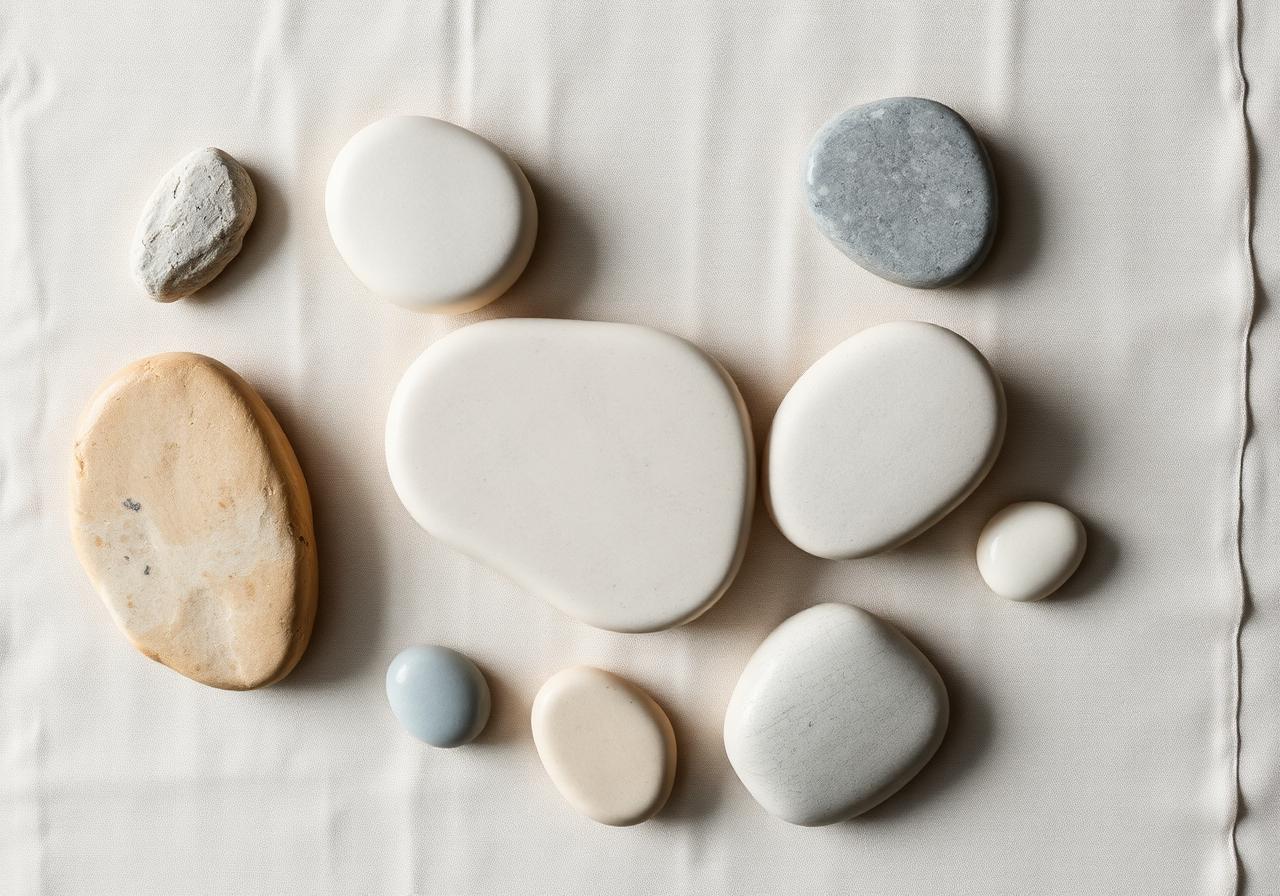
Example visual of smooth cremation stones. Exact appearance can vary naturally.
Quick Answer
- Cremation stones are a newer memorial option where cremated remains are transformed into smooth, solidified stone-like pieces.
- They are sometimes called solidified remains, cremation rocks, ash stones, or ashes turned into stones.
- They may appeal to families who want a cleaner, shareable, touchable alternative to loose ashes in an urn.
- They may not be right for families who prefer a traditional urn, scattering, burial, jewelry, or a lower-cost option.
Reminder: confirm current pricing, timing, shipping, eligibility, and service details directly with the provider before ordering.
Ad · Affiliate
Want to see what a cremation stones order actually looks like? See How Cremation Stones Work →
What This Guide Covers
- What are cremation stones?
- Are cremation stones the same as Parting Stone?
- How are cremation stones made?
- What do cremation stones look like?
- Why families choose cremation stones
- Who cremation stones may be right for
- Who may prefer another option
- Cremation stones vs urns, jewelry and more
- Cremation stones cost
- Common questions families ask
- Pet cremation stones
- DIY cremation stones
- Cremation stones near me
- Questions to ask before choosing
- Final verdict
- FAQ
What Are Cremation Stones?
Cremation stones are solidified remains — cremated ashes that have been transformed into smooth, stone-like pieces by a specialized provider. They are not ordinary decorative stones, and they are not the same as urns, cremation jewelry, or memorial diamonds. The remains themselves become the memorial.
Some families search for the same idea using terms like cremation rocks, cremation memorial stones, ash stones, ashes turned into stones, or stones made from ashes. All of these point to the same general concept: a tactile, shareable alternative to keeping cremated remains as loose ashes in a sealed container. Some families also search for DIY cremation stones — our caution guide explains why we recommend a professional process for ashes.
Once returned, the stones can be kept together, shared among family members, displayed at home, included in a memorial service, or placed in meaningful locations — depending on what your family feels is right.
Are Cremation Stones the Same as Parting Stone?
Not exactly. Cremation stones is the general concept and the term most families use when searching. Parting Stone is one specific, well-known provider that offers solidified remains as a service. Other providers and approaches may exist, but Parting Stone is currently the best-known name in this category.
For a closer look at the service itself, see our Parting Stone review, the Parting Stone cost guide, our Parting Stone complaints walkthrough, our Parting Stone Shark Tank update, and a comparison with other memorial choices in our Parting Stone alternatives guide. If you are checking cremation stones near me, our availability guide explains what to verify locally. For background on the underlying format, see our cremation stones and solidified remains explainer.
Ad · Affiliate
See how Parting Stone works
The clearest way to understand what cremation stones look like in practice is to see the current process, packaging, and timeline directly on the provider's site.
See How Parting Stone WorksHow Are Cremation Stones Made?
The process is specialized and varies by provider, but at a high level it generally includes:
- Cremated remains are received by a qualified provider, usually mailed in by the family or coordinated through a funeral home.
- The remains are prepared and processed — impurities or non-organic material may be carefully removed.
- The remains are transformed into a material that can be shaped, using proprietary heat and processing techniques.
- Stones are formed from the prepared material — natural variation in size and shape is normal.
- The stones are solidified and finished, then inspected for quality.
- The finished stones are returned to the family in a presentation container.
This is not a do-it-yourself process. Families who want solidified remains should use a qualified professional provider and confirm the exact process, timing, and what is included directly with that provider.
How Cremated Ashes Become Cremation Stones
Loose cremated remains
Ashes returned by the crematory in a temporary container.
Provider process
Specialized preparation, transformation, and shaping by a qualified provider.
Smooth cremation stones
Solidified, stone-like pieces in soft neutral tones.
Family keepsakes
Returned to the family — kept together, shared, or displayed.
Simplified visual. Confirm the exact process directly with your chosen provider.
What Do Cremation Stones Look Like?
Cremation stones are typically smooth, solid, and stone-like in appearance. They can vary in shape, size, color, and texture from family to family — natural differences in the underlying remains and the provider's process mean no two sets are identical.
Many sets feature soft neutral tones — pale grey, beige, off-white, sometimes light blue or warm tan. Some pieces may be small and pebble-like; others may be larger and palm-sized. Providers cannot guarantee a specific count, color, or finish, only the general character of the result.
Heads up: photos shown by any provider are illustrative. If the exact look matters to your family, ask the provider what variation is normal before ordering.
Why Families Choose Cremation Stones
- Easier to hold than loose ashes, which can feel difficult or clinical to handle.
- Can be divided respectfully among family members so each person has a tangible piece.
- Can feel less clinical than a sealed urn for families who find that hard.
- Portable and easy to display in a home, on a shelf, or alongside photos.
- May help family members who feel uncomfortable being near loose cremated remains.
- Can be used alongside a celebration of life or memorial display.
For some families, the appeal is also financial clarity. If cremation has already been chosen — see our direct cremation guide — cremation stones become a question of memorial format, not a separate funeral decision. The cremation vs burial costs guide can help frame the broader budget.
Who Cremation Stones May Be Right For
Families who want to share remains
Several relatives can each receive a tangible piece.
Families who want a touchable memorial
Stones can be held, not just looked at.
Families uncomfortable with loose ashes
Solidified pieces can feel calmer and less clinical.
Families choosing direct cremation
A simple cremation paired with a meaningful keepsake at home.
An alternative to a traditional urn
Useful when one central container does not fit the family.
Families who want a modern memorial option
A newer, design-conscious approach to remembrance.
Who May Prefer Another Option
Cremation stones are not the right answer for every family. They may not fit if:
- You prefer a traditional urn as a single, central memorial.
- Your loved one wanted their ashes scattered in a meaningful place.
- Strong religious or cultural preferences point to burial or another tradition.
- Budget is tight — a basic urn or scattering is usually more affordable.
- You are not ready to decide and would rather wait.
- Someone in the family wants a wearable keepsake — cremation jewelry may suit better.
- Burial of ashes or cemetery placement is part of the plan.
If any of these sound familiar, our alternatives to keeping ashes in an urn guide compares the most common options side by side, and the cremation vs burial costs guide helps put the bigger budget in context.
Best Choice by Situation
A fast way to narrow your options. Find the situation that sounds most like your family — then explore that path further below.
If…
Want shareable keepsakes
ConsiderCremation stones or keepsake urns
If…
Want lowest cost
ConsiderBasic urn or scattering
If…
Want wearable remembrance
ConsiderCremation jewelry
If…
Want one central memorial
ConsiderTraditional urn
If…
Want a luxury memorial
ConsiderMemorial diamond
If…
Not ready to decide
ConsiderKeep ashes safely for now
If…
Want a touchable alternative to loose ashes
ConsiderCremation stones
Cremation Stones vs Urns, Jewelry, Scattering and More
A side-by-side look at how cremation stones compare with other common memorial options. Cost levels are general comparisons — confirm any specific service price directly with the provider.
| Option | Best for | Uses all remains or a portion? | Shareable with family? | Cost level | Portable? | Main drawback |
|---|---|---|---|---|---|---|
| Cremation stones | Shareable, tactile keepsakes | All remains | Yes — multiple pieces | Premium | Yes | Premium cost; several-week wait; permanent |
| Traditional urn | One central memorial | All remains | Hard — usually one container | Low to moderate | Limited | Harder to share across family |
| Keepsake urn | Sharing a small portion across relatives | Portion only | Yes — buy several | Low (per piece) | Yes | Holds only a small portion |
| Cremation jewelry | A wearable daily keepsake | Portion only | One person at a time | Low to moderate | Yes | Holds only a tiny portion |
| Scattering ashes | A symbolic release in a meaningful place | All remains | One-time event | Low | N/A | Final; family must agree; rules apply |
| Memorial diamond | One heirloom-quality keepsake | Portion only | One stone; high cost to repeat | Very high | Yes | Highest cost; long lead time |
| Memory box / photo memorial | Combining photos, letters and small items | Symbolic only | Easy to duplicate or share | Low | Yes | Does not address what to do with ashes |
Cost levels are general comparisons, not guarantees. Always confirm pricing, timing, and inclusions with each provider.
Ad · Affiliate
Comparing options is the most useful step. To anchor the comparison, see how cremation stones look and work today. See How Cremation Stones Work →
Cremation Stones Cost
Cremation stones cost depends on several factors:
- Whether the order is for human or pet remains.
- Shipping kit, return shipping, and any handling fees.
- What is included in the package — presentation container, materials, instructions.
- Whether the service is purchased directly or bundled through a funeral home.
- Any current promotions, payment plans, or seasonal pricing.
Cremation stones generally sit in the premium range relative to a basic urn, but well below memorial diamonds. For a full breakdown of pricing, what is included, and how it compares with urns and other keepsakes, see our broader cremation stones cost guide and brand-specific Parting Stone cost guide. We do not publish guaranteed prices — confirm current pricing directly with the provider.
Ad · Affiliate
Pricing changes over time. Check current cremation stones pricing on the provider's site. Check Current Parting Stone Pricing →
Cremation Stones from Ashes: Common Questions Families Ask
Can ashes really be turned into stones?
Yes. Specialized providers transform cremated remains into solid stone-like pieces using proprietary processing.
Are cremation stones the same as ashes?
They come from the cremated remains, but the remains have been solidified rather than left as loose ashes.
Can they be divided among family members?
Yes — that is one of the most common reasons families choose this option.
Can they be scattered?
They can be placed in meaningful outdoor locations, but as solid pieces, not loose ashes. Check local rules first.
Can you keep them at home?
Yes. Many families keep stones at home in a presentation container or simple display.
Can they travel with you?
Often yes — including by air. Confirm current airline and destination rules before flying.
What if the ashes have been at home for years?
Cremated remains do not expire. Many providers can still transform remains years after cremation. Confirm eligibility directly.
Pet Cremation Stones
Pet cremation stones are a related option for families who want a tangible memorial for a dog, cat, or other beloved companion. Some providers offer dedicated pet services, often with adjusted pricing and packaging. We plan a separate, more detailed guide for pet cremation stones — for now, confirm current details with the provider directly if a pet memorial is what you are exploring.
DIY Cremation Stones: Should Families Try This?
Some people search for "DIY cremation stones" hoping to handle the process at home. Because cremated remains are deeply personal and emotionally significant, and because the transformation involves specialized processing, this is not a typical home craft project.
Most families who want solidified remains are better served by a qualified professional provider. If your interest is more about a hands-on memorial project, DIY ideas are usually safer and more meaningful when limited to non-remains keepsakes — such as memory boxes, photo frames, framed letters, planted memorial gardens, or simple memorial garden stones placed near a meaningful spot.
This guide does not provide DIY instructions for processing cremated remains. Please consult a qualified provider.
Cremation Stones Near Me
Cremation stones are usually arranged through a specialized provider that works nationwide via mail-in services rather than a local storefront. Some funeral homes can also help coordinate the order at the time of cremation, or after.
If you are in West Virginia and exploring options locally, our directory and cremation guides may help:
Questions to Ask Before Choosing Cremation Stones
A short checklist to help families think through the decision calmly.
- What did our loved one want?
- Do we want to keep, divide, scatter, or transform the ashes?
- How many family members would actually want a keepsake?
- What is the current cost?
- What is included in the package?
- How long does the process take from start to finish?
- How are the remains shipped or transferred to the provider?
- Can our funeral home help coordinate the order?
- What will the stones look like, and what variation is normal?
- What happens if the family is unsure or wants more time?
- Are there cultural, religious, or family considerations to respect?
- Are there any local rules for scattering or placement we should know?
Final Verdict
Cremation stones may be worth considering for families who want a clean, touchable, shareable alternative to loose ashes in an urn. They are not the only good option, and they are not always the right one.
For some families, a traditional urn, keepsake urns, cremation jewelry, scattering, a memorial diamond, or a memory box will be a better fit emotionally, culturally, or financially. The most useful next step is usually to compare options side by side and confirm current details with any provider you are seriously considering — there is no rush, and there is no single "correct" choice.
Editorial Note
WVFuneralBoard is an independent funeral planning resource and does not replace advice from a funeral director, crematory, attorney, insurance agent, or other licensed professional. Confirm current pricing, timing, eligibility, shipping, and service details directly with each provider before ordering.
Ad · Affiliate
See how Parting Stone works
Cremation stones may be worth considering if your family wants a shareable alternative to keeping ashes in a traditional urn. Before deciding, compare the options and confirm current details directly with the provider.
See How Parting Stone WorksAffiliate link. WVFuneralBoard may earn a small commission at no extra cost to you.
Frequently Asked Questions
Related Guides
Review
Parting Stone Review
Compare
Parting Stone vs Urn
Compare
Parting Stone vs Cremation Jewelry
Compare
Parting Stone vs Scattering Ashes
Compare
Parting Stone vs Memorial Diamond
Decision
Is Parting Stone Worth It?
Trust
Is Parting Stone Legit?
How It Works
Turn Ashes Into Stones
Pets
Pet Cremation Stones
Pets
Pet Memorial Ideas
Pets
Pet Memorial Stones
Jewelry
Cremation Jewelry for Ashes
Urns
Urns for Cremation Ashes
Keepsake
Small Urns for Ashes
Keepsake
Keepsake Urns for Ashes
Decision
What to Do With Ashes After Cremation
Cost
Parting Stone Cost
Compare
Parting Stone Alternatives
Cremation
Direct Cremation Guide
Costs
Cremation vs Burial Costs
Tool
Cremation vs Burial Calculator
Memorial
Celebration of Life Ideas
Planning
How to Plan a Funeral
First Steps
What to Do When Someone Dies
Planning
Pre-Planning a Funeral