Solidified remains are cremated remains that have been transformed into smooth, stone-like memorial pieces. This guide explains what they are, how they're different from loose ashes, how they compare with urns, jewelry, scattering and other options, and how to decide whether they're worth a closer look for your family.
Quick Answer
What are solidified remains?
- Solidified remains are cremated remains transformed into smooth, stone-like pieces.
- People may also call them cremation stones, ash stones, cremation rocks, or "ashes turned into stones."
- Parting Stone is one known provider of solidified remains.
- May appeal to families who want a touchable, shareable alternative to loose ashes in an urn.
- May not be right for families who prefer a traditional urn, scattering, burial, jewelry, or a lower-cost option.
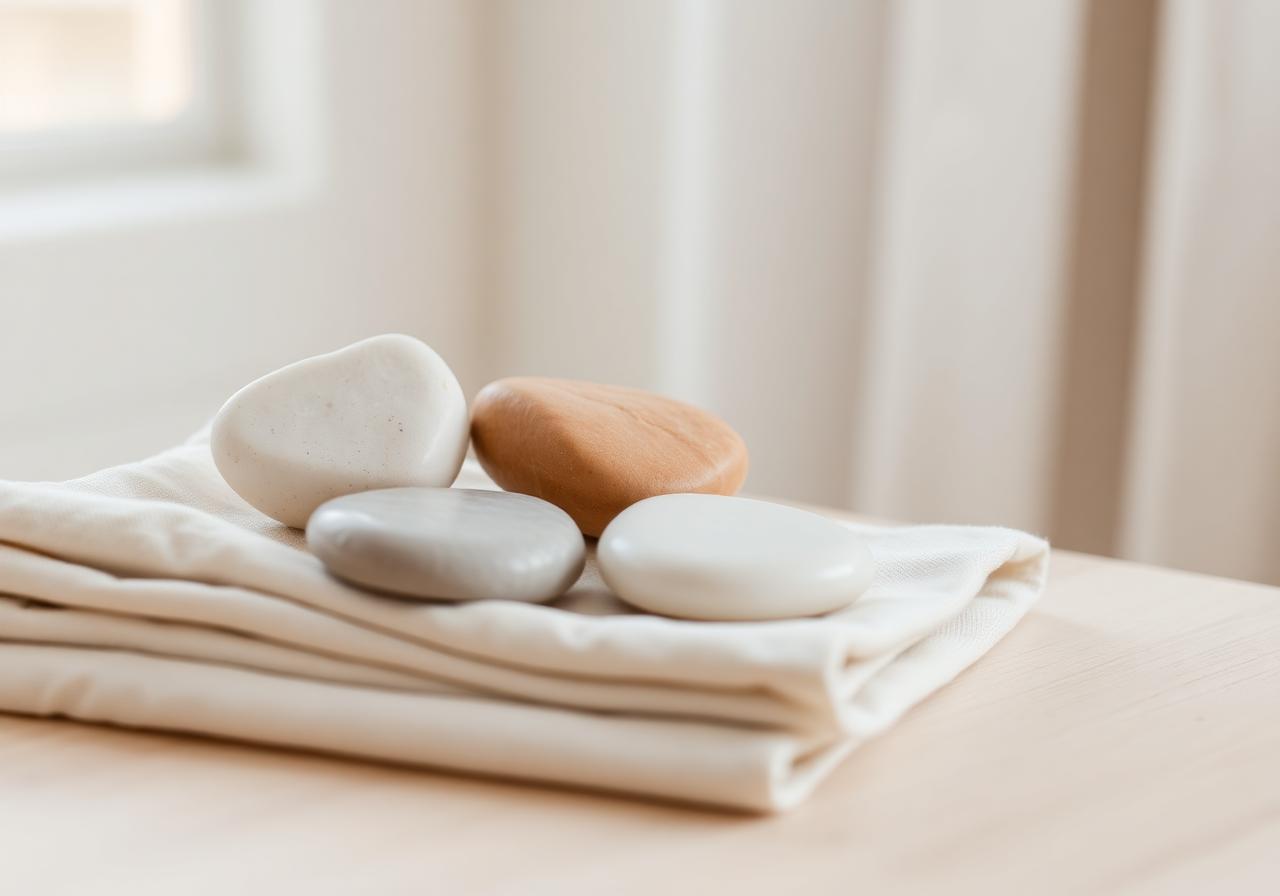
Example visual of smooth solidified remains. Exact color, shape, size, texture, and number can vary.
What This Guide Covers
- What are solidified remains?
- Solidified remains vs cremation stones vs Parting Stone
- How solidified remains work
- Where to go next
- Visual process
- What do they look like?
- Why families consider them
- Who they may be right for
- Who may prefer another option
- Solidified remains vs ashes in an urn
- Solidified remains vs cremation jewelry
- Solidified remains vs scattering
- Solidified remains vs memorial diamonds
- Comparison table
- How much do they cost?
- Available near me?
- Solidified remains for pets
- Solidified remains and Shark Tank
- Questions to ask before choosing
- What if your family is unsure?
- Final verdict
- FAQ
What Are Solidified Remains?
Solidified remains are a memorial option in which cremated remains are transformed into solid, stone-like pieces. They are different from loose ashes kept in an urn, different from cremation jewelry that holds a tiny portion of ashes, and different from memorial diamonds or purely decorative stones.
Depending on the family's wishes and the provider's guidance, solidified remains can be kept together, displayed, divided among relatives, or used as part of a broader memorial decision. People also describe this category using related terms like solidified cremated remains, solidified remains stones, cremation stones, and ashes into stones.
Solidified Remains vs Cremation Stones vs Parting Stone
These three terms get used almost interchangeably, but they each carry a slightly different meaning. Understanding the difference helps families compare options without confusing a category, a phrase, and a brand.
- Solidified remains — the formal, category-level term for cremated remains transformed into solid pieces. It is descriptive, not brand-specific.
- Cremation stones — a common consumer-friendly phrase used in everyday conversation and search. It usually refers to the same general category as solidified remains.
- Parting Stone — a specific company / provider associated with solidified remains. Parting Stone is one provider in this category, not the category itself.
In short: solidified remains and cremation stones describe the same broad memorial format, while Parting Stone is one named provider that offers it. The terms are related, but they are not exactly the same.
For broader category context, see our cremation stones guide, the cremation stones cost overview, how ashes are turned into stones, and our caution-focused DIY cremation stones explainer. For provider-specific detail, see our Parting Stone review and Parting Stone cost guide.
See How Parting Stone Works Ad · Affiliate link
How Solidified Remains Work
At a high level, the process families typically describe looks like this:
- Choose a provider that offers solidified remains.
- Confirm pricing, timeline, and process directly with that provider before sending anything.
- Transfer cremated remains according to the provider's current instructions.
- Provider prepares and transforms the remains into smooth, stone-like pieces.
- Finished solidified remains are returned to the family for keeping, displaying, or sharing.
Because cremated remains are personal and irreplaceable, families should use a qualified provider and follow that provider's current instructions exactly. We do not publish DIY, chemical, or technical instructions for transforming remains.
Where to Go Next
Use this table to jump to the right next guide based on what you want to know.
| If you want to know… | Best next guide |
|---|---|
| What are cremation stones? | Cremation stones guide |
| How do ashes turn into stones? | Turn ashes into stones |
| Is Parting Stone worth it? | Is Parting Stone worth it? |
| How much does it cost? | Parting Stone cost |
| Is Parting Stone legit? | Is Parting Stone legit? |
| Are there complaints? | Parting Stone complaints |
| Is it available near me? | Parting Stone near me |
| What are the alternatives? | Parting Stone alternatives |
Visual Process
Step 1
Cremated remains
Loose ashes from a standard cremation.
Step 2
Provider process
Qualified provider prepares and processes the remains.
Step 3
Solidified stones
Smooth, stone-like pieces are formed.
Step 4
Family keepsakes
Returned to the family — kept, displayed, or shared.
What Do Solidified Remains Look Like?
Solidified remains can vary in shape, size, color, and texture. Families should not expect every piece to look identical — the appearance depends on the remains themselves and the provider's process. A typical set may include several smooth pieces in muted, natural tones, but exact details should be confirmed with the provider before ordering.
Why Families Consider Solidified Remains
- Stones can feel easier to hold than loose cremated remains.
- They can be shared among multiple family members.
- They may feel more natural or less clinical than a traditional urn for some families.
- They are portable and easy to display.
- They can help families who feel uncomfortable with loose ashes.
- They can be part of a celebration of life or a quiet home memorial.
For broader context, see what to do with ashes after cremation, celebration of life ideas, and our direct cremation guide.
Who Solidified Remains May Be Right For
Want shareable keepsakes
Multiple relatives can each keep a piece rather than one central container.
Uncomfortable with loose ashes
Solid pieces may feel easier to hold than loose cremated remains.
Choosing direct cremation
A simple cremation can be paired with a touchable memorial format afterward.
Want a touchable memorial
Stones can be held, displayed at home, or used in a memorial gathering.
Want an alternative to one urn
Solidified remains may better fit families that don't want a single central urn.
Already keep ashes at home
Families who have kept remains at home for months or years may explore this option later.
Who May Prefer Another Option
- Families who prefer a traditional urn.
- Families who want cremation jewelry.
- Families who want scattering or burial.
- Families on a tighter budget.
- Families not ready to make a final decision.
- Families with religious or cultural preferences that point elsewhere.
- Families whose loved one specifically requested another option.
For a side-by-side overview of other memorial choices, see our Parting Stone alternatives guide.
Solidified Remains vs Ashes in an Urn
A traditional urn keeps cremated remains in a single container — a familiar choice for families who want one central memorial at home or at a cemetery. Solidified remains instead transform the remains into individual stone-like pieces. Urns may be better when a family wants one focal memorial; solidified remains may be better when several relatives each want a touchable keepsake. Neither is universally "better."
Solidified Remains vs Cremation Jewelry
Cremation jewelry is wearable and usually holds only a small portion of ashes inside a pendant, ring, or bracelet. Solidified remains can use the remains differently and tend to be easier to share among multiple relatives. Jewelry is often the right pick for one personal wearable keepsake; solidified remains can fit better as a family-wide format. Many families combine both.
Solidified Remains vs Scattering Ashes
Scattering can be deeply meaningful — it returns the remains to a place that mattered to the loved one — but it can also feel final. Solidified remains may appeal to families who want something they can keep, hold, share, or place. Whichever path you consider, families should always check local rules and permissions before scattering. See what to do with ashes after cremation for a broader overview.
Solidified Remains vs Memorial Diamonds
Memorial diamonds are typically a luxury, very high-cost option that creates a single lab-grown stone using carbon from cremated remains. Solidified remains tend to be more practical for families who want multiple physical pieces. Memorial diamonds may fit families who want a single high-end jewelry-style memorial. Both have long lead times and should be researched directly.
Comparison Table
| Option | Best for | Uses all or portion? | Shareable with family? | Cost level | Portable? | Main drawback | Related guide |
|---|---|---|---|---|---|---|---|
| Solidified remains | Touchable, shareable family keepsakes | Most or all | Yes — multiple pieces | Premium | Yes | Cost; appearance can vary | Parting Stone review |
| Traditional urn | One central memorial | All | Limited (one container) | Low–Moderate | Yes (single piece) | Not easily divided among relatives | Urns for ashes |
| Keepsake urns | Dividing ashes among relatives | Portion (per urn) | Yes — one per relative | Low–Moderate (per urn) | Yes | Each piece holds only a small portion | Keepsake urns |
| Cremation jewelry | Wearable personal keepsake | Small portion | Yes (limited) | Low–High | Yes (worn) | Holds very little remains; seal quality varies | Cremation jewelry |
| Scattering ashes | Honoring a release wish | All or portion | No (released) | Low | No after scattering | Final; rules vary by location | What to do with ashes |
| Memorial diamond | High-end wearable memorial | Small portion | Limited | Very high | Yes | Expensive; long timeline | Memorial alternatives |
| Memory box / photo memorial | Personal, low-cost remembrance | None or token portion | Yes (DIY) | Low | Yes | Less of a 'remains' format | Memory box ideas |
How Much Do Solidified Remains Cost?
Cost depends on the provider, current pricing, whether the remains are human or pet, shipping, and what is included. We do not publish a guaranteed price. Confirm current pricing directly with the provider, and see our Parting Stone cost guide for a structured breakdown of how to think about value vs. budget.
Ad · Affiliate
Want to confirm current solidified remains pricing?
Open Parting Stone to review current pricing, what's included, shipping, and timeline directly from the provider.
See How Parting Stone WorksAre Solidified Remains Available Near Me?
Solidified remains may not require a local storefront. Families often start by ordering directly from a provider, and some funeral homes may help coordinate. Do not assume there is a local Parting Stone office in every city. See our Parting Stone near me guide for how to check availability and what to ask.
Solidified Remains for Pets
Some providers offer solidified remains for pets. Eligibility, the amount of remains needed, and the process may differ from human services. For background, see our pet cremation stones guide, then confirm current pet service details directly with the provider.
Solidified Remains and Shark Tank
Many families first hear about solidified remains through Parting Stone's Shark Tank appearance. National TV visibility helped introduce the format to a wider audience, but it should not be the only reason to choose any service. Compare current pricing, process, reviews, and alternatives. For more, see our Parting Stone Shark Tank update.
Questions to Ask Before Choosing Solidified Remains
Decision checklist
- What did the loved one want?
- Does the family want to keep, divide, scatter, bury, or transform the ashes?
- How many relatives want a keepsake?
- What is the current cost?
- What is included in that price?
- What is the current timeline?
- How are cremated remains transferred?
- Can a funeral home help coordinate?
- Can appearance, size, color, texture, or number of pieces vary?
- What happens if the family changes its mind?
- Are there religious, cultural, or family considerations?
- Would an urn, jewelry, scattering, burial, or keepsake urn fit better?
What If Your Family Is Unsure?
- It is okay to wait — there is no deadline pressure on this decision.
- Keep cremated remains safely while you decide.
- Talk with close family before committing.
- Review the loved one's wishes if they shared them.
- Compare urns, keepsake urns, jewelry, scattering, burial, and solidified remains.
- Avoid rushing a decision that may feel final later.
Final Verdict
Solidified remains may be worth considering for families who want a touchable, shareable alternative to loose ashes in an urn. They are not the only meaningful option — traditional urns, keepsake urns, cremation jewelry, scattering, burial, memory boxes, and memorial diamonds may be a better fit for some families depending on budget, beliefs, family agreement, and the loved one's wishes.
Ad · Affiliate
Considering solidified remains for your family?
Review the current process, pricing, timeline, and what's included directly from the provider before deciding.
See How Parting Stone Works