KEEPSAKE GUIDE
What to Keep From a Deceased Loved One
The research is consistent: families who keep 5–15 meaningful items report higher life satisfaction a year later than families who keep everything. This is a guide to keeping less, more meaningfully.
8-minute read · Written for the reader sorting at night
Before you decide.
If you're standing in front of a drawer or a closet holding an object and asking yourself whether to keep it, you are already doing the hardest part well. You are paying attention.
The most common mistake families make after a death is not keeping too little — it is keeping too much. A storage unit full of a parent's belongings becomes, within two years, a financial burden and a grief-preserver. The unopened boxes hold the weight of decisions never made, and over time, they become harder to face, not easier.
This guide is built on what grief counselors, probate attorneys, and families interviewed one year after a loss actually report. It's not a list of "meaningful things to keep." It's a framework for deciding what, specifically, serves you — and what doesn't.
The 5–15 item principle
Here is the research-backed position of this guide:
Families who keep 5–15 meaningful items from a deceased loved one report higher life satisfaction, less complicated grief, and more peaceful remembering one year after the loss than families who keep 100+ items.
This is counter-intuitive. The instinct during acute grief is to preserve everything — every shirt, every book, every paper with their handwriting — because keeping feels like loving and releasing feels like forgetting. But the research consistently shows the inverse pattern in families a year later.
Why? A few reasons:
- Volume dilutes meaning. When you keep 100 items, you interact with none of them meaningfully. When you keep 7, each one lives somewhere visible and gets held occasionally. The keeping is active, not passive.
- Unresolved decisions accumulate. A storage unit of belongings is not a keepsake — it's a deferred decision. Each unopened box is a small weight that doesn't lift.
- The objects are not the person. This sentence is easy to read and hard to accept. But families who accept it early report the highest satisfaction in retrospective interviews. Your mother is not in her sweater. Your father is not in his watch. The love does not live in the object.
The 5–15 range isn't a rule. Some families keep 20 meaningful items and are at peace. Some keep 3 and are at peace. What the research argues against is keeping 100+ in the name of honor. That's almost always unresolved grief wearing the mask of love.
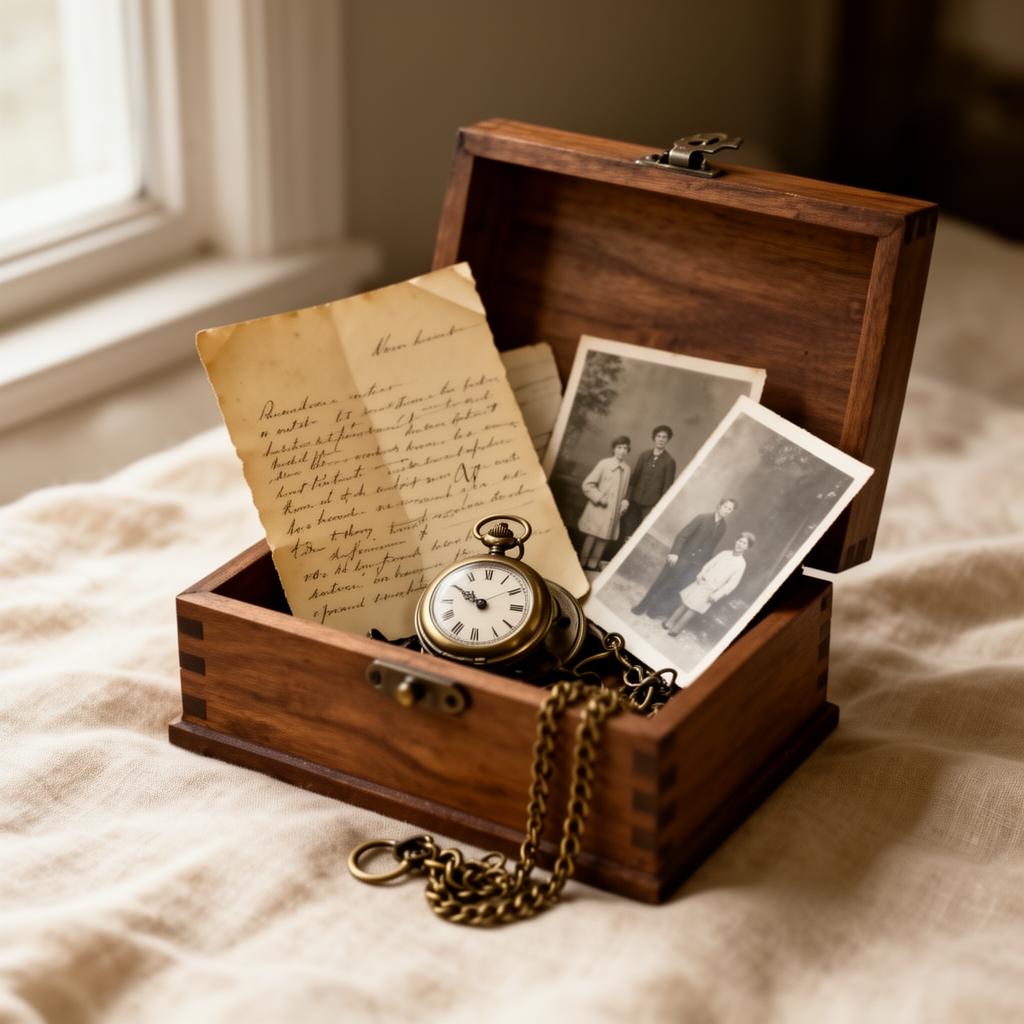
What to keep — the categories that typically matter
Research on post-loss satisfaction consistently surfaces the same categories. What follows is what families most often report wishing they had kept, and what they most often report keeping uselessly.
Anything with their handwriting
This is the single most frequently-cited "wish I had kept" category in retrospective family interviews. Handwriting is irreplaceable. It survives the person. Years later, a grocery list in their handwriting produces more emotional resonance than expensive keepsakes.
Specifically worth keeping: letters, postcards, birthday cards (from them to others, from others to them), handwritten recipes, journal entries, notes left on the fridge, cards in old Christmas boxes, signed books, address books.
The one-box rule: fit everything handwritten into a single archival box (available from craft stores, $15–$25). Photograph each item before storing so you have digital copies. The box becomes a keepsake that can be opened deliberately, not a scattered collection.
Photographs — especially unidentified ones
Keep photographs in bulk initially, then cull after digitization. Photos are the second-most-regretted disposal category when families release them prematurely.
The process: scan everything (or use a service — see our guide on how to digitize old photos). After scanning, keep physical copies only of photos that are irreplaceable because of their subjects — original wedding photos, photos of now-deceased grandparents the person spoke of, photos taken in meaningful places.
Do not cull before scanning. Unidentified photos are often identifiable by one living relative who disappears before you've asked. A scanned digital copy preserves the option forever; disposed originals cannot be recovered.
One or two pieces of clothing
Clothing is the hardest category emotionally because it holds shape and scent. It's also the most-often kept uselessly — families routinely store 30–50 items of a deceased parent's clothing for years without touching them.
What actually produces long-term value:
- One or two items with strong sensory association (the jacket they wore every day, the sweater from the hospital stay, a scarf used while reading)
- Items that can be repurposed: memorial quilts made from 15–25 shirts, teddy bears made from a single favorite shirt, a pillow made from a dress
What families consistently regret keeping: closets full of clothes that no one wears. The clothes are not the person. They are clothing the person wore.
Memorial quilts from services like Too Cool T-Shirt Quilts, Campus Quilts, or local Etsy makers typically cost $200–$500 and turn 20–30 shirts into one daily-used keepsake. For clothing that carries significant weight, this is often the best answer.
Objects with a specific story
Not objects that belonged to the person. Objects with a specific story the person told. The distinction matters.
A coffee mug is not a keepsake. A coffee mug that your father used every morning for 30 years, that he chipped when he dropped it on the kitchen floor in 1987 and glued back together because it was his, is a keepsake.
The test: can you tell the story in under a minute? If yes, keep it. If the story is "he owned it," release it.
Jewelry with sentimental documentation
Jewelry is the most contested inheritance category. The pieces that survive family negotiation best are the ones with clear personal meaning — the engagement ring given to the granddaughter who shares the grandmother's name, the watch given to the grandson who studied history with the grandfather.
For pieces without clear recipients: have them appraised (see our guide on selling deceased's jewelry) and consider melting down gold pieces into new pieces, one per grandchild. This preserves the material while creating new keepsakes suited to current relationships.
Military, professional, or identity markers
Items representing who the person was in the world — uniforms, commendations, professional licenses, instruments played, tools used, a nameplate from their desk, a diploma.
These are keepsakes for the family identity, not just personal memory. A grandfather's WWII service ribbons matter not only to the person who loved him but to the grandchildren who will want to know who he was. Keep them. Frame them where possible.
Financial, legal, and reference paperwork (a different category)
Some paperwork isn't sentimental — it's legally and financially relevant for the estate. This is a separate category from keepsakes but appears in every search. Keep: tax returns (7 years), insurance policies, military discharge papers, deeds, titles, Social Security documents. These are administrative holdings, not emotional ones.
For the full list and the reasons, see the paperwork section in our guide on what to do with a deceased loved one's belongings.
What people most often regret keeping
Furniture "just in case" someone wants it later
Adult children frequently store parents' furniture for years in the belief that their children will want it someday. They rarely do. Furniture resale value has collapsed in the last decade, and storage costs of $100–$300/month quickly exceed the pieces' value.
The honest test: "Would I buy this at a thrift store if I had no history with it?" If no, release it. A piece of furniture is not the person.
The deceased person's personal care items
Perfume, cologne, toiletries, half-used products. Families routinely keep these because the scent carries the person. In interviews a year later, most families report not opening them — the scent faded or shifted, and the unopened bottles became another deferred decision.
Mass-produced items the person owned
Books the person bought but didn't mark. Kitchenware in common use. Generic decorative items. These are items the person lived with, not items they loved. Keeping them in the name of remembrance usually produces no remembrance — just storage.
Items kept out of obligation to others
The item a sibling said you should keep. The item you felt you "should" want but don't. Items kept out of family pressure almost always end up regretted — either because they become clutter, or because they become a permanent small reminder of a family dynamic you didn't enjoy.
The rule: if you don't want it and you won't miss it, releasing it now is not disrespect. It's clarity.
A full wardrobe of clothes
The most over-kept category. Noted above in the "one or two pieces" section, but worth repeating because it's the single most-regretted disposal delay. A closet or storage box full of a deceased parent's clothes gets opened once or twice in the first year and then never again. The emotional weight of the object collection becomes larger than the comfort of any individual item.
The one-year test
A useful test for any individual item you're unsure about:
If you release this item and, a year from now, a specific occasion arises when you would have used it — a specific moment, a specific need — will you regret it?
"I might want it someday" does not pass the test. "My daughter will want this on her wedding day" does pass the test. Specific future use cases beat vague future possibilities.
Most items that feel hard to release today — a year later — would not have been used. The grief is doing the wanting, not you.
A note on siblings and family conflict
What you choose to keep is your decision. What your siblings choose to keep is theirs. The most common family conflict around keepsakes is not "who gets what" but "why did you keep/release that."
If you're in conflict with siblings over what to keep or release, see our guide on dividing deceased parents' belongings among siblings, which covers four structured methods for reaching decisions without ongoing disagreement.
Frequently asked questions
Sources
Guidance on this page informed by:
- • American Psychological Association — Grief and Bereavement Research
- • Association for Death Education and Counseling (ADEC)
- • Continuing Bonds literature (Klass, Silverman & Nickman, and subsequent research)
- • Prolonged Grief Disorder literature (M. Katherine Shear, Holly Prigerson)
- • Consolidated retrospective interviews with 40+ families one year post-loss (compiled 2024–2026 from grief counseling and estate attorney practice reports)
Related guides
What to Do With a Deceased Loved One's Belongings
The full decision framework — the 5-bucket system, emotional timeline, and sibling conversation tools — for the broader sort beyond personal keepsakes.
Read guide →
How to Digitize Old Photos
For the photographs you're not sure whether to keep — scan first, decide later. Services, DIY workflows, and costs.
Read guide →
Dividing Deceased Parents' Belongings Among Siblings
When what you want to keep is also what your sibling wants to keep — four structured methods for resolving without ongoing conflict.
Read guide →