STORAGE DECISION GUIDE
Some inherited belongings genuinely need temporary storage — a home sale is pending, family is out of state, items are disputed in probate. Others get stored out of grief and stay there for years. Here's how to tell which is which, and how to do it right.
10-minute read · Honest cost comparison · Decision framework
The short answer.
Storage is the right choice when there's a specific, dated reason to delay. A pending home sale. Out-of-state family who can't transport until next month. Disputed items during probate. A renovation before you move into the inherited home.
Storage becomes a trap when there's no specific dated reason. "I might want it someday" or "I'm not ready to decide" consistently produces 2–5 years of $100–$300 monthly storage bills for items that never get retrieved. Most families who rent storage "temporarily" during estate sorting still have the unit three years later.
This guide covers the four realistic storage options with honest monthly costs, and a 4-question decision framework to help you figure out whether storage is actually the right answer for your situation — or whether it's deferred decision-making wearing a storage-unit disguise. For the broader sorting framework, see what to do with a deceased loved one's belongings.
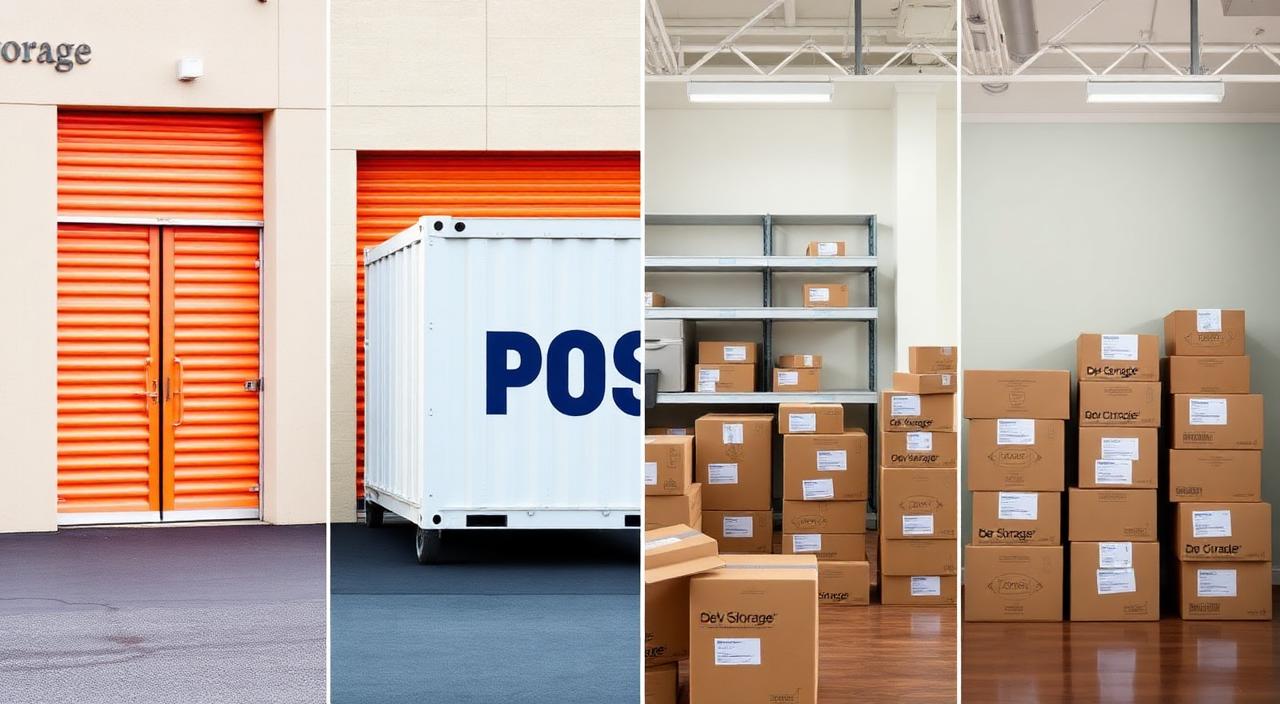
The 4 storage options — head-to-head comparison
Four ways to store inherited items during the estate sorting period. Each has specific situations where it's the right answer.
| Factor | Self-Storage Unit | PODS / Portable | Climate-Controlled | In-Home Temporary |
|---|---|---|---|---|
| Best for | Standard furniture, boxes, household goods | Out-of-state moves, phased transitions | Antiques, wood furniture, photos, documents, electronics | Short-term (1–3 months) during sorting |
| Monthly cost (5x10) | $70–$150 | $180–$280 | $120–$220 | $0 (uses existing space) |
| Monthly cost (10x20) | $180–$380 | $280–$450 | $260–$480 | N/A |
| Setup time | Same day (drive to facility) | 2–5 days (container delivery) | Same day | Same day |
| Accessibility | 24/7 at most facilities | Moved to your location or facility | 24/7 at most facilities | Immediate |
| Climate control | Usually no | No (unless climate-controlled POD) | Yes (60–80°F, 30–50% humidity) | Depends on home |
| Insurance | Add-on $10–$30/mo | Included, limited | Included, higher | Your homeowner's |
| Typical usage length | 6–36 months (often longer than intended) | 1–6 months | 3–18 months | 1–3 months |
| When it becomes a mistake | When "3 months" becomes 3 years | When the delivery location keeps changing | When items were never worth climate control cost | When it crowds your living space |
The monthly costs above assume U.S. average pricing. Urban markets (NYC, SF, LA) run 30–60% higher. Rural markets run 20–40% lower. Spring and summer rates are typically $20–40/month higher than fall/winter.
Jump to the storage type that fits your situation
- Self-storage → for local, static storage of mixed inventory
- PODS / portable → for out-of-state moves and phased transitions
- Climate-controlled → for antiques, photos, wood furniture, documents
- In-home temporary → for 1–3 month sorting periods with no home-sale pressure
Deep dive: self-storage units
The most common choice for inherited-item storage. Works well for specific situations, badly for others.
How it works
You rent a climate-free or optionally climate-controlled unit at a storage facility. Sizes range from 5x5 (walk-in closet sized) to 10x30 (one-car garage). Access is typically 24/7. You drive to the facility when you need something. Rent is month-to-month with no long commitments.
Typical costs by unit size (2026 national averages)
- 5x5 (25 sq ft): $40–$90/month — fits 10–25 boxes, small furniture
- 5x10 (50 sq ft): $70–$150/month — fits a studio apartment's worth of belongings
- 10x10 (100 sq ft): $110–$220/month — fits a 1-bedroom apartment
- 10x15 (150 sq ft): $150–$300/month — fits a 2-bedroom apartment
- 10x20 (200 sq ft): $180–$380/month — fits a 3-bedroom house
- 10x30 (300 sq ft): $280–$550/month — fits a 4-bedroom house with garage contents
When self-storage is the right answer
Choose self-storage when you have a specific timeline (90 days or less) to resolve where the items are going, you're local enough to access the unit when needed, and you've already made hard decisions about what's worth storing versus what should be released now.
Self-storage at 12+ months is almost always a sign that the initial sort was incomplete. If you're still paying on month 13, use that as the trigger to finish the sort — don't renew another 12 months. See how to sort through a deceased loved one's belongings for the workflow.
When self-storage is the wrong answer
- When you're storing "in case" rather than for a specific dated reason
- When you're 500+ miles from the facility (you won't drive back)
- When the items stored are furniture that would cost less to replace than 12 months of storage
- When the stored items have emotional weight preventing any decision (storage is not a substitute for grief work)
Affiliate links below. We may earn a small commission at no cost to you. Products are based on real-use recommendations, not commission rates.
Storage supplies worth buying from the start
If self-storage is your route, invest in proper supplies from the start. Most families who don't use proper boxes and labels spend more time re-sorting in the facility a year later than they saved by rushing initial storage.
Medium moving boxes (18" cube) — pack of 10–15
Uniform size makes stacking predictable and inventory easier to track at a glance.
Typical: $30–$60 for a 10-pack
Check on Amazon →Heavy-duty packing tape — 6 rolls
Standard office tape fails within 6 months in typical storage conditions. Heavy-duty holds for 3+ years.
Typical: $15–$25
Check on Amazon →Moving blankets / furniture pads — 6-pack
Scratches and dents happen during moving in and out. Pads prevent roughly 70% of damage.
Typical: $40–$80 for a 6-pack
Check on Amazon →DampRid moisture absorbers — 6-pack
Climate-free units see 40–60% humidity in summer months. DampRid prevents the resulting mildew and warping.
Typical: $20–$40 for a 6-pack
Check on Amazon →Large archival-quality plastic bins — 5-pack
For photos, documents, and fabric items. Bin storage beats boxes for anything moisture-sensitive.
Typical: $75–$150 for a 5-pack
Check on Amazon →Industrial permanent markers + labeling system
Labels fade and fall off after 12+ months in typical storage. Permanent marker directly on boxes is the only reliable long-term approach.
Typical: $10–$20
Check on Amazon →Deep dive: PODS and portable storage
Portable storage containers that get delivered to your location, filled at your pace, and either stored at the company's facility or moved to your destination.
How it works
A shipping-container-sized storage unit is delivered to your driveway or the deceased's driveway. You pack it at your own pace over days or weeks. When full, the container is either moved to PODS' climate-controlled warehouse or transported to your final destination (your home, a new home, another storage facility).
Major providers: PODS, U-Pack ReloCubes, U-Haul U-Box, Zippy Shell.
Typical costs (2026)
- 7-foot PODS container: $150–$250/month rental + $75–$150 delivery/pickup
- 12-foot PODS container: $180–$320/month rental + $100–$180 delivery/pickup
- 16-foot PODS container: $220–$380/month rental + $125–$220 delivery/pickup
- Moving fee if transported: $800–$3,500 depending on distance
When PODS / portable is the right answer
Choose portable storage when you're handling an out-of-state estate and need to transport belongings to your home state, you're in the middle of a move where the inherited items need to go with you eventually, or you need to pack at the deceased's home over several weeks without daily trips to a storage facility.
The hybrid use case (pack at deceased's home, store temporarily, then move to your home) is specifically what PODS was designed for. For this scenario, it's almost always cheaper and less stressful than renting a traditional storage unit locally and then paying a moving company.
When PODS is the wrong answer
- When the items aren't going to move — a local storage unit is cheaper
- When you need daily access (PODS at the facility requires 24–48 hours notice for retrieval)
- When you have very high-value items needing climate control (PODS climate options are limited)
Affiliate link. We may earn a commission at no cost to you.
Get a PODS quote for your situation
PODS delivers portable storage containers to your driveway (or the deceased's), rented by the month. Particularly good for out-of-state estates, phased moves, and families who want to pack at their own pace over several weekends rather than daily trips to a storage facility.
- No long-term contract — month-to-month
- Containers stored at PODS climate-controlled facility while you decide
- Transported to any destination when you're ready
Affiliate link · No obligation · 800+ U.S. metro areas
Deep dive: climate-controlled storage
Worth the premium for specific items — wood antiques, photographs, documents, electronics, fabric keepsakes. Not worth it for typical household goods.
What climate control actually provides
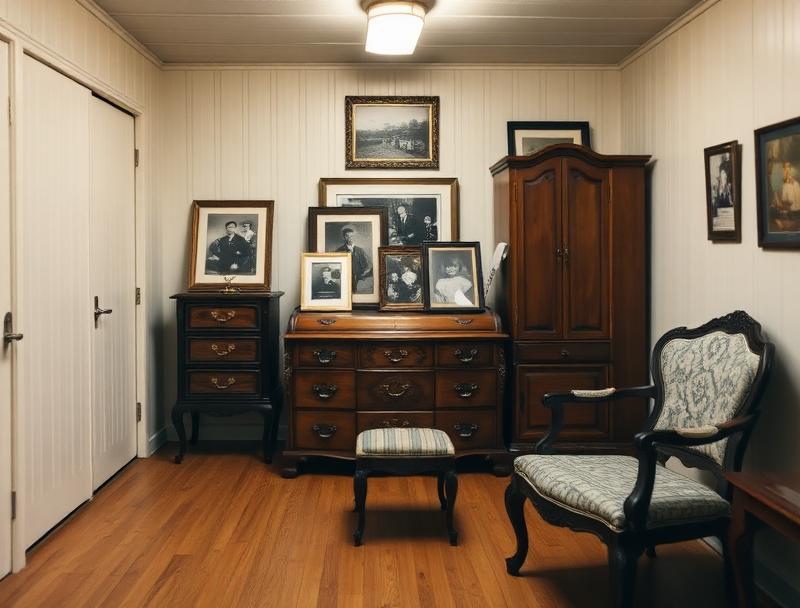
Climate-controlled storage maintains the unit between 60–80°F and typically 30–50% relative humidity. This prevents wood warping and cracking, photo emulsion fading, paper deterioration, fabric mildew, leather drying out, and electronics condensation damage.
When climate control is worth the extra $30–$80/month
- Solid-wood antique furniture (especially pre-1970 pieces)
- Photographs, slides, negatives
- Paper documents not digitized
- Musical instruments (pianos, guitars, brass instruments)
- Electronics — tube TVs, vinyl records, vintage audio equipment
- Leather furniture or collections
- Textile keepsakes (wedding dress, quilts, military uniforms intended for preservation)
- Fine art or mounted photographs
When climate control is NOT worth it
- Standard modern furniture (IKEA-era, particleboard, laminate)
- Clothing intended for short-term storage (under 6 months)
- Plastic-based items
- Boxed kitchenware (dishes, tools)
- Athletic equipment
- Most books (unless rare first editions)
Typical costs
- 5x5 climate-controlled: $70–$130/month
- 5x10 climate-controlled: $120–$220/month
- 10x10 climate-controlled: $180–$320/month
- 10x15 climate-controlled: $240–$420/month
- 10x20 climate-controlled: $260–$480/month
The hybrid approach most families should use
For most estates, the right answer isn't full climate-controlled storage for everything. It's a small (5x5 or 5x10) climate-controlled unit for the genuinely sensitive items — photos, documents, wood antiques, specific textiles — combined with either regular storage for bulkier standard furniture OR (more often) just releasing the standard furniture through an estate sale.
The total cost is usually $100–$200/month for the smaller climate unit, compared to $300–$500/month for a large climate unit housing everything. The items that didn't need climate control go to estate sale, donation, or family members. See estate sale vs auction vs garage sale for selling channel comparison.
Deep dive: in-home temporary storage
The option most families don't consider but often should: keep inherited items in the deceased's home (or a family member's home) during the sort period.
How it works
Rather than paying for external storage during the 1–3 month sorting period, keep items in place until decisions are made. Works well when the deceased's home isn't immediately on the market, a family member has spare room, or the sort will genuinely take under 90 days.
This option saves $100–$400 during the sorting period — money that's better spent on professional appraisals, estate sale services, or donation-pickup tips than on an external storage unit used for 60 days and then emptied.
When in-home works
- You have 3+ months before the home must be emptied
- Someone checks the home at least weekly (pipe breaks, rodents, HVAC issues)
- No insurance/liability issue with the items remaining in the home
- You're doing the sort yourself, at your own pace
When in-home doesn't work
- Home is actively being shown for sale (staged)
- Out-of-state family with no local check-in
- Deceased's home has hazardous conditions (hoarder cleanup, mold, water damage — see hoarder cleanup services)
- Family conflict over access to the home
Insurance note
If items remain in the deceased's home, confirm homeowner's insurance is maintained on the property during the estate period. Most policies have a vacancy clause that can void coverage after 30–60 days of no occupancy. The executor should check with the insurance carrier immediately after the death — don't assume coverage continues.
The 4-question decision framework
Answer the questions in order. The first clear answer tells you whether storage is the right move and which type.
Question 1
Is there a specific, dated reason you need storage?
"Home sale closes in 45 days." "Moving to take possession in 3 months." "Probate court date in 90 days." — these are dated reasons.
"I'm not sure what to do yet" / "I might want this someday" / "my kids might want this" — NOT dated reasons.
If yes (dated reason): Continue to Q2.
If no (no dated reason): Storage is likely the wrong answer. Start with the 5-bucket framework on what to do with deceased belongings before renting storage.
Question 2
How long do you actually need storage for?
Under 90 days: In-home temporary (Option 4) is usually the best answer. Don't rent external storage for a sort that will resolve in 90 days.
3–6 months: Self-storage (Option 1) or PODS (Option 2) depending on mobility. Pick self-storage if items stay local; PODS if they need to move.
6–18 months: Consider carefully. At 6+ months, most inherited items are being held out of indecision, not for a specific reason. Revisit Q1 honestly.
18+ months: Almost always the wrong answer. You've paid $1,800–$5,400 in storage fees — usually more than the items are worth. Finish the sort.
Question 3
Do any items require climate control?
Yes, climate control: Photos, documents, wood antiques, leather, electronics, textiles.
No, climate control isn't worth it: Standard furniture, boxed kitchenware, athletic equipment, plastic items.
Mixed (some climate-sensitive, most not): Use the hybrid approach — small climate-controlled unit for sensitive items, regular storage OR estate sale for the rest.
Question 4
Are the items physically moving to another location?
Yes (going to your home, another state, a new owner's home): PODS or portable storage is almost always cheaper and easier than traditional storage + moving company.
No (staying local, same general area): Self-storage is cheaper than portable for static storage.
The decision summary
In 60%+ of post-death estates, the right answer is not external storage — it's either in-home temporary storage or completing the sort faster so nothing needs external storage. External storage is the right answer for roughly 20–30% of estates (out-of-state families, pending sales, disputed items). The remaining 10–20% who rent storage without a clear reason usually regret it within 2 years.
If you're unsure, rent month-to-month with no long-term commitment, and set a calendar reminder at 90 days to make a real decision. Don't sign annual storage contracts during acute grief.
The hidden cost of storage
The pattern to know
The real cost of storage isn't the monthly rent. It's the deferred decision-making.
The average American storage unit holds items worth approximately $2,500 — and costs $1,200–$2,400 per year.
Over 3 years (the median duration per SpareFoot data), most families pay more in storage than the stored items are worth. More importantly: the items stored become a source of ongoing stress and grief rather than being resolved and released. Every monthly bill is a small reminder of a decision deferred.
This page exists to help you use storage when it's genuinely the right answer — not as a substitute for finishing the work. For the items you decide to release, see estate sale vs auction vs garage sale.
Frequently asked questions
Sources
Information on this page informed by:
- • SpareFoot — 2024–2026 Self-Storage Industry Reports
- • Self Storage Association — Annual Industry Data
- • PODS, U-Haul, Public Storage published pricing (April 2026)
- • Interior Services Consortium — Climate Control Guidance for Antiques
- • Interviews with 4 estate executors and 3 professional organizers (2025–2026)
- • Individual market pricing verified against SpareFoot and direct facility quotes in 12 U.S. markets
Related guides
What to Do With a Deceased Loved One's Belongings
Before committing to storage, the broader framework — the 5-bucket decision system, emotional waves, and sibling conversations — for the whole sort.
Read guide →
Estate Sale vs Auction vs Garage Sale: Which Makes You the Most Money?
For the items you decide not to store — which selling channel fits your estate and what each realistically nets.
Read guide →
Dividing Deceased Parents' Belongings Among Siblings
When the storage question is actually a decision deferred because the family can't agree — the four structured methods for resolving without ongoing conflict.
Read guide →