The Physical Workflow
The tools, the sequence, and the timing for actually doing the work. Written for the Saturday morning you open the door and don't know where to start.
11-minute read · Physical workflow, not emotional framework
Before you start.
This page assumes you've already made the bigger decisions — that this is the right time to sort, that the family has discussed what happens to what, that nobody is actively objecting to starting. If any of those aren't true yet, start with our broader guide on what to do with a deceased loved one's belongings first. It covers the 5-bucket decision framework, the emotional timeline most families aren't warned about, and how to handle sibling disagreements before they escalate.
This page covers what happens AFTER those decisions. The physical process. The tools, the order of rooms, the timing, and the handling techniques that make the difference between sorting efficiently and burning out by Wednesday.
What you need before you start
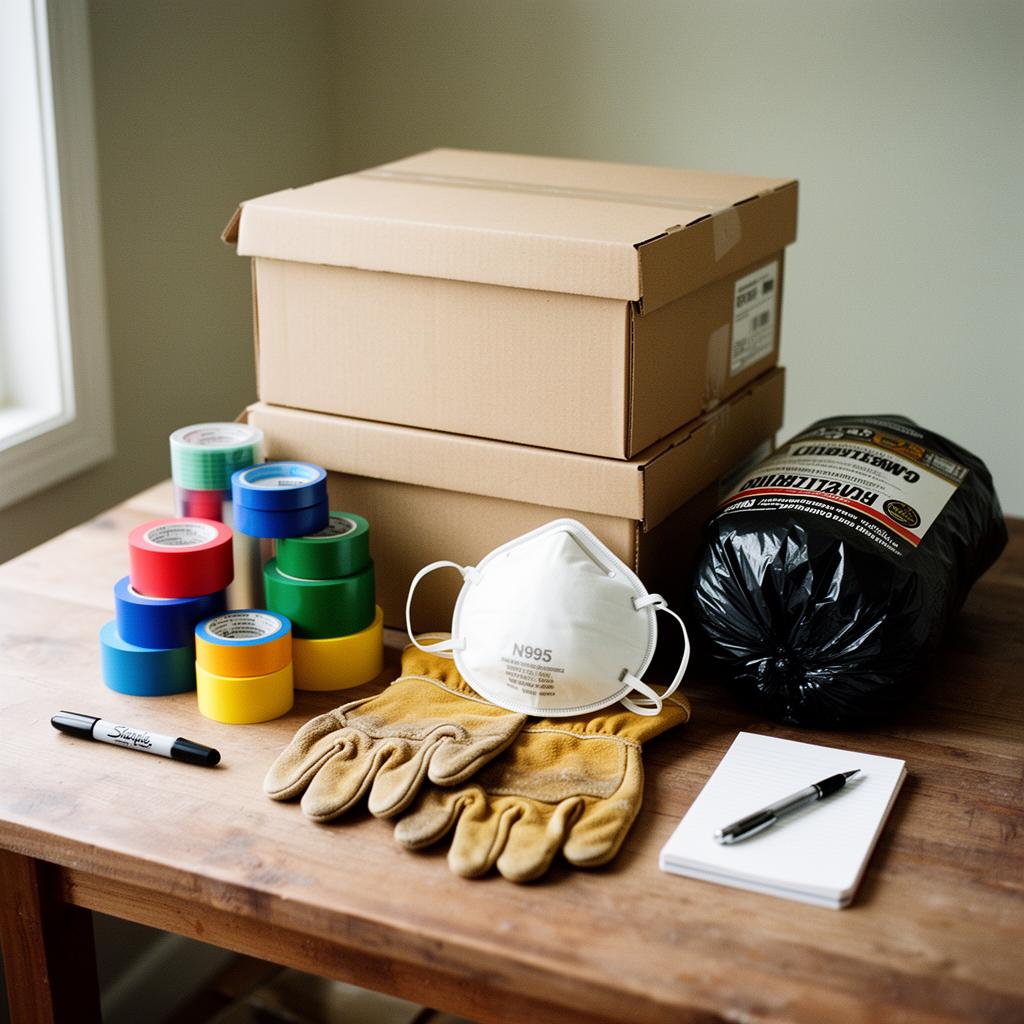
Professional organizers and estate sorting crews bring a specific kit to every job. Assembling this before you start saves roughly 30% of the total time versus making hardware store runs mid-sort.
Boxes and containers
- 20–30 banker's boxes or medium moving boxes (keep / family / donate piles)
- 10–15 heavy-duty contractor trash bags (release pile)
- 4–6 clear plastic bins with lids ("decide in 6 months" items)
- 3–5 file boxes for paperwork
Labeling and sorting
- Large black marker (Sharpie)
- Colored masking tape — five colors, one per bucket
- Sticky notes or index cards
- Packing tape
- Scissors
Protective gear
- Work gloves (paper cuts, splinters, unknown residues)
- Dust mask or N95 respirator (attics, basements, photo collections)
- Safety glasses (optional; recommended for garages and workshops)
Documentation
- Phone with a camera (before-photos and questionable-item research)
- A notebook or printed spreadsheet for the inventory log
- A small portable charger
Comfort
- A folding chair or stool — sorting standing up for 4 hours is harder than it sounds
- Water bottle
- Snacks that don't require hands
- A floor lamp or clip-on work light — older homes have inadequate lighting in closets and basements
Budget: $150–$300 at any home improvement store or Amazon. Banker's boxes are $3–$5 each; expect to use roughly one box per 10 cubic feet of sorted items. For estates under 1,500 square feet, the kit above is usually sufficient. For larger homes, double the box count.
The room-by-room sequence
The order in which you sort rooms matters more than most families expect. Sorting in the wrong order creates rework — items from later rooms need to go back into rooms you already finished — and burns out the team faster. The sequence below is what professional organizers use.
Room 1
Garage, shed, utility, basement (days 1–2)
Start here because: the emotional weight is lowest, the decisions are easiest, and you build team momentum before entering the harder rooms. You'll also find tools during this stage that you'll need for the rest of the house (extension cords, ladders, cleaning supplies, flashlights).
Typical time: 8–16 hours total. Expected output: 60–80% of contents go to release or sell. Small percentage keep.
- Sort tools into three piles: keep (family member uses them), sell (clean, working, has resale value), release (rusted, broken, outdated).
- Lawn equipment: test before deciding. A mower that "just needs gas" often needs a $200 repair.
- Paint and chemicals: most municipalities have hazardous waste days — do not put in regular trash.
- Extension cords, tape, batteries: set aside for the rest of the sort, don't release yet.
Room 2
Kitchen (day 2–3)
Kitchens are deceptively fast once you start, because most contents are obviously in one of two states: useful or unusable. Expired pantry items go immediately. Small appliances are either working or not — plug them in to check.
Typical time: 6–10 hours. Expected output: 40–60% release, 20–30% donate, 15–20% keep or family.
- Pantry/refrigerator first — food safety. Do this within 72 hours of arriving if possible.
- China and serving sets often have more sentimental than market value — ask the family before assuming anyone wants them.
- Cast iron, high-quality knives, Pyrex, vintage Tupperware: check eBay sold listings before donating; real money is sometimes in the kitchen.
- Cleaning supplies and half-empty bottles: release.
- Spices older than 2 years: release.
Room 3
Living room, dining room, office (day 3–5)
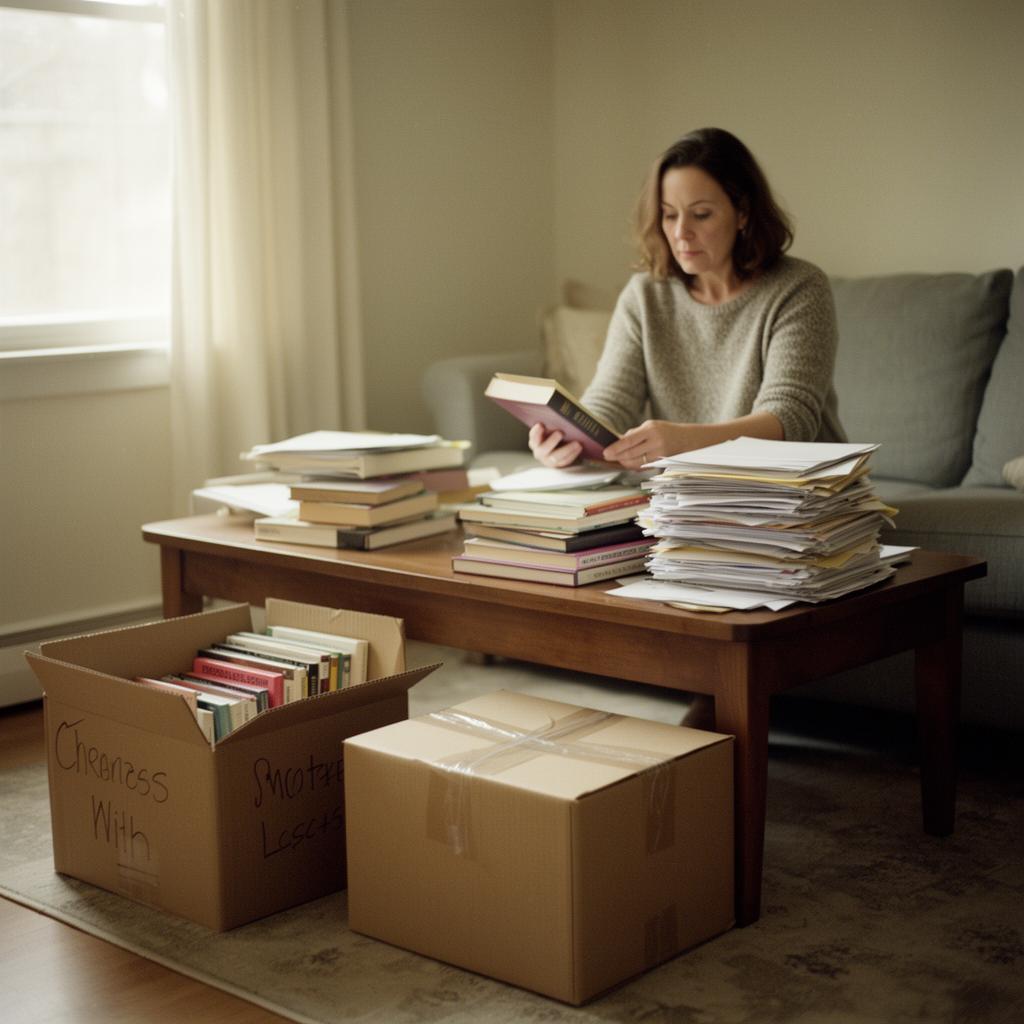
These rooms contain the most mixed-value content: furniture with both sentimental and monetary weight, books, papers, memorabilia. Move slower here. Decisions that felt automatic in the garage will feel harder.
Typical time: 10–20 hours. Expected output: More even split — roughly 25% keep/family, 25% donate, 20% sell, 30% release.
- Paperwork: do NOT throw away anything on the first pass. Collect all paper into banker's boxes and sort separately during evening hours (see Paperwork Pass below).
- Books: most books sell for $0.50–$2 each. Boxing and donating to a library or Habitat ReStore is usually faster than selling.
- Furniture: follow the honest resale math — if there's no specific person who wants it within 60 days, it's usually cheaper to release than to store.
- Photo albums and photographs: pull ALL photos aside for the Photo Pass. Do not sort or dispose in the moment.
Room 4
Bedrooms other than the primary (day 5–6)
Guest bedrooms and children's rooms (even decades-old) are medium-difficulty. Contents are often storage for things the owner didn't use — seasonal items, gift items never deployed, clothes that no longer fit.
Typical time: 4–8 hours per room. Expected output: 70–80% release or donate.
- Closets in these rooms are often where personal papers and keepsakes were hidden — check every shoebox, every drawer, every pocket.
- Children's rooms (adult children who've long since moved out): ask the adult children what they want before disposing. Give them 30 days.
Room 5
Primary bedroom, closets, bathrooms (day 6–8)
Hardest room. Most families we hear from describe the primary bedroom as "where the grief came back." Clothes hold shape, scent, and daily routine. Jewelry boxes contain decisions between siblings. Drawers contain intimate items.
Typical time: 10–20 hours. Expected output: Emotionally impossible to predict. Plan for this room to take 2x longer than any other.
- Do NOT start the primary bedroom alone. Even if you're the executor doing most of the work, have a sibling, spouse, or close friend physically present for this one.
- Clothes: keep 3–7 items maximum for sentimental reasons. Donate the rest. Some families commission a memorial quilt from 15–20 shirts.
- Jewelry: every piece goes into a single box for a separate appraisal and distribution meeting. Do not sort or distribute in the moment.
- Medications: every prescription goes to a DEA drug take-back location or a pharmacy with a medication disposal program. Do NOT flush.
- Bathroom items: release most. Keep sealed, unopened items for donation (women's shelters often accept these).
Room 6
Attic and miscellaneous storage (day 8–9)
Attics are usually the last room because (1) they contain long-forgotten items that belong in memory categories rather than decision categories, (2) the physical conditions (heat, dust, spiders) are miserable, and (3) attic content is usually 80%+ release anyway.
Typical time: 4–8 hours. Expected output: 80–90% release. Small percentage "attic gold" — inherited furniture, boxed heirlooms, forgotten military memorabilia.
- Wear the dust mask. Attic dust includes 30+ years of skin cells, insect bodies, and rodent waste.
- Christmas and holiday decorations: donate, don't release. Charities like Operation Christmas Child want these.
- Old luggage: almost always release (resale value is under $10 per piece and donation centers often refuse).
- Sealed boxes marked with dates ("Tax 1987," "Kids' Art 1992") — open and photograph contents, usually safe to release unless paperwork-relevant.
Three separate "passes" you do alongside the rooms
Three categories of items cannot be sorted room-by-room. They need their own workflow, done alongside the physical room sort. Running these as separate passes saves enormous time and prevents lost items.
The Paperwork Pass
Every piece of paper from every room goes into a paperwork box during room sorting. Do not sort paper in the rooms — it breaks the momentum of the physical sort, and paperwork decisions require attention you don't have at hour 4.
Do the paperwork pass in the evenings, or on a separate day, at a table with good light. Sort into:
- Legal/financial keep: Wills, deeds, titles, tax returns (7 years), insurance policies, pension statements.
- Sentimental keep: Letters, handwritten notes, cards, recipes in the deceased's handwriting.
- Research needed: Unidentified photos, notes with names you don't recognize, foreign-language documents.
- Release: Expired insurance, old bills, junk mail, instruction manuals for products no longer owned.
Typical time: 6–12 hours for a full home's paperwork. Budget 1–2 hours per banker's box.
The Photo Pass
Every photograph, album, slide, negative, and home movie goes into a single photo box during room sorting — regardless of which room it was found in. Pull them out of any album that's falling apart, but keep intact albums intact.
The photo pass happens AFTER all rooms are sorted:
- Scan or digitize before distributing originals among family (see our guide on how to digitize old photos).
- Identify people while memory is still fresh — sit with a surviving parent, aunt, or uncle if possible.
- Distribute physical originals by family agreement AFTER digital copies exist.
- Consider a memorial photo book or slideshow as a natural endpoint.
Typical time: Variable. Scanning service handles most of it; identification can be done during the scanning wait.
The Jewelry and Valuables Pass
Every piece of jewelry, every coin, every piece of small collectible (stamps, military medals, fountain pens, pocket watches), and every item someone in the family might contest goes into a single box during room sorting.
This pass happens at a family meeting AFTER the rooms are done:
- Appraise anything that looks valuable.
- Distribute using one of the four structured methods from our guide on dividing belongings among siblings.
- Do not let jewelry leave the house with any one sibling before the meeting.
Typical time: 2–4 hours for the meeting, plus 1–3 weeks for appraisals.
Physical handling techniques
A few specific techniques that professional estate sorters use and that families often don't know.
- 1Photograph every room before you touch anything. Ten minutes with a phone camera creates a record that protects the executor legally and helps family members who couldn't be there. Photograph drawer contents before emptying. Photograph closet contents before removing. This step pays for itself the first time a sibling asks 'where did Dad's watch go?'
- 2Work top-down and outside-in. In each room: ceiling shelves first, then upper cabinets, then standing furniture, then drawers, then floor. Dust falls, so working top-down means you're not re-dusting finished areas. Outside-in means starting at the closets and edges, moving toward the center of the room.
- 3One person sorts, one person labels, one person hauls. If you have 3+ people, this division is 2–3x faster than everyone doing everything. Assign roles before starting each session.
- 4Never reach into anything you can't see into. Old homes have mice, spiders, and sharp objects in unexpected places. Pull drawers out to look inside. Shake sealed bags before opening. Wear gloves.
- 5Bag and label as you go, not at the end. Every box or bag gets a colored tape label (keep/family/donate/sell/release) and a marker note indicating room + contents as soon as it's filled. Coming back to label a pile of unmarked boxes at the end of the day turns into 2 hours of extra work.
- 6Hold difficult items for 10 seconds, then decide. If an item takes longer than 10 seconds of internal deliberation, photograph it, write the emotion on a sticky note attached to the photo, and put the physical item in a 'decide in 6 months' clear bin. Do not let a single item derail the whole room.
- 7Take 15 minutes off every 90 minutes. Leave the room. Go outside. Drink water. Cognitive performance on this kind of work degrades sharply after 90 minutes continuous. Breaks are efficiency, not indulgence.
How long it actually takes
Families consistently underestimate the time this takes. The realistic range from the professional organizers we've surveyed:
| Home size | Typical total hours | Calendar time |
|---|---|---|
| 1 BR apartment | 15–30 hours | 1 weekend |
| 2 BR home, minimal contents | 40–60 hours | 2–3 weekends |
| 3 BR home, moderate contents | 70–110 hours | 4–6 weekends |
| 4 BR+ home with garage, basement, attic | 130–200 hours | 6–10 weekends |
| Hoarding situation (any size) | 2–5x the numbers above | See hoarder cleanup |
The two biggest time traps: (1) trying to do more than 6 hours of sorting per day — productivity falls off a cliff after hour 5, and the decisions you make in hour 6 are often the ones you regret. (2) Starting with the hardest room first — families who start with the primary bedroom burn out before reaching the garage, and the garage then gets rushed at the end.
When to consider hiring help
Most families do the sorting themselves. But there are three situations where professional help pays for itself:
- You have under 2 weekends available before a deadline (house sale, lease end, travel). A full-service estate cleanout company handles the entire sort in 3–5 days. Typical cost: $1,500–$5,000 depending on home size. See estate cleanout services near me for company comparisons.
- The home is Level 3+ on the ICD Clutter Scale (hoarding situation). A family-directed sort is not safe for biohazard-level homes. See hoarder cleanup services for specialized companies and what Level 3–5 cleanups actually involve.
- The family has already decided nothing needs sorting — everything is release. In that case, skip sorting entirely. A junk removal service will haul an entire home's contents for $400–$1,800. See junk removal after death.
For any other situation, the DIY workflow on this page is the right approach.
Frequently asked questions
Data and guidance on this page informed by
- National Association of Productivity & Organizing Professionals (NAPO)
- Institute for Challenging Disorganization (ICD)
- American Society of Estate Liquidators
- Consolidated interviews with 4 professional organizers and 2 estate cleanout crew leads (April 2026)
- 2026 timing survey across 14 completed estate sorts (U.S., mixed home sizes)
You May Also Find Helpful:
What to Do With a Deceased Loved One's Belongings
The strategic companion to this page — the 5-bucket decision framework, emotional waves, and sibling conversations. Read before you start sorting if you haven't yet.
Read →Dividing Deceased Parents' Belongings Among Siblings
When the sorting surfaces disagreements — four structured methods (Round-Robin, Silent Bidding, Monetary Equalization, Three-Pile Split) for dividing items fairly.
Read →Estate Cleanout Services Near Me
If the sort is larger than you can handle in the available time, or if the home is in a condition that requires professional help.
Read →