Estate Sale Guide
An average estate sale in a 2–3 bedroom home grosses $3,000–$8,000 over a two-day weekend. Whether DIY or hired, knowing the numbers is what separates families who net money from families who break even.
12-minute read · DIY vs hire comparison included
What an estate sale actually is (and isn't).
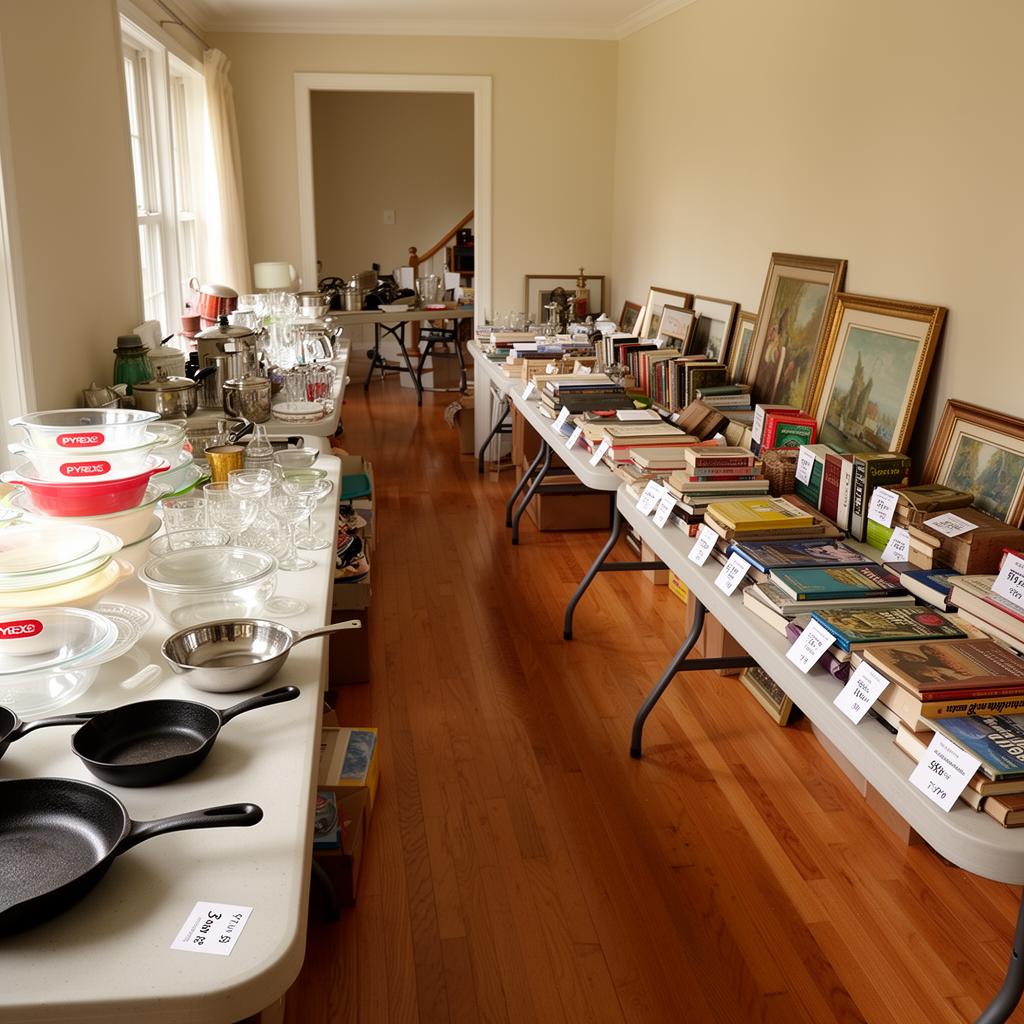
An estate sale is a public sale held inside a home — usually over two or three days, usually a weekend — where the contents of the home are priced, displayed, and sold. Unlike a garage sale, it typically includes furniture, kitchenware, tools, collectibles, clothing, books, and sometimes a vehicle. Unlike an auction, buyers pay the sticker price (though light haggling is common on the second day).
Estate sales are not the right answer for every estate. Three conditions generally need to be true for a sale to be worth the effort: (1) there is enough sellable inventory to fill a house — roughly 200+ items with real resale value, (2) nobody in the family wants most of the inventory, (3) the home can be closed to the public for 2–3 weekends (one for prep, one for the sale, one for cleanup).
If any of those aren't true, the alternatives are better: online marketplaces for a handful of valuable items, a single-day consignment pickup for furniture, or a straight donation-and-junk-removal approach. See our guides on what to do with a deceased loved one's belongings and estate cleanout services near me.
The real numbers
Before deciding DIY or hire, understand what an estate sale typically makes and what it typically costs.
| Metric | Typical range |
|---|---|
| Gross sales, 2–3BR home | $3,000–$8,000 |
| Gross sales, 4BR+ home with high-value items | $8,000–$25,000+ |
| Duration | 2–3 days (usually Fri–Sun) |
| Prep time | 20–60 hours before sale |
| Company commission | 30–45% of gross (35% is the typical rate) |
| DIY net (after no commission) | 100% of gross, minus your time |
| Hired company net (after commission) | 55–70% of gross, zero of your time |
| Company cleanout included | Sometimes (ask) |
| Time from contact to sale (hiring) | 4–8 weeks typical |
The "typical" numbers above are from 2026 U.S. averages. Urban markets (NYC, SF, Boston) run 15–30% higher on gross but also 3–7 points higher on commission. Rural markets run lower on both.
The honest DIY vs hire math
Most estate sale content online is written by estate sale companies and quietly funnels everyone toward hiring. Here's the actual math, honestly.
Example: A 3-bedroom home, $5,000 estimated gross.
Box A: DIY
100% of gross, all of your time
- Gross sales$5,000
- Ads, permits, supplies−$200
- Tent, signage, change, pricing guns−$150
- Net$4,650
- Your time70–100 hours
Box B: Hired company at 35%
55–70% of gross, almost none of your time
- Gross sales$5,000
- 35% commission−$1,750
- Setup / cleanup fees$0 to −$300
- Net$2,950–$3,250
- Your time4–8 hours
The breakeven
Hiring a company costs you roughly $1,500–$1,750 on a $5,000 gross sale. That buys you back 60–90 hours. If your time is worth more than about $20/hour — or if you have paid work you'd skip to run the sale yourself — hiring wins. If your time is effectively $0 (retired, unemployed, between jobs) and you enjoy the process, DIY wins.
The hidden variable: what's in the house
A company at 35% commission often grosses 20–40% MORE than a DIY sale because they price better, market better, and attract higher-paying buyers. On our $5,000 hypothetical, a company might gross $6,500–$7,000, which changes the breakeven significantly. For estates with antiques, collectibles, or specialty items (tools, musical instruments, military items, mid-century furniture), the company's pricing expertise often beats their commission. For high-value items like fine jewelry, see our guide on selling deceased jewelry.
Quick rule of thumb
- Under $3,000 estimated gross: DIY usually wins. Commissions leave too little.
- $3,000–$8,000 with mostly ordinary household contents: Roughly a wash. Pick based on your time.
- $8,000+ or unusual items: Hire. Professional pricing and marketing earn back the commission.
If you're hiring a company
Some links in this guide are affiliate links. If you hire or use a company through them, we may earn a small commission at no cost to you. Our picks are based on research and reader reports, not commission rates.
How to find a reputable company
Estate sale quality varies dramatically. The company running your neighbor's sale well may not exist in your city. Two paths:
Path 1: EstateSales.net (free directory)
EstateSales.net is the dominant U.S. estate sale marketplace and acts as a directory of local companies. You can browse upcoming sales in your area, see which companies run them regularly, and read company profiles. It's free to use and not gated behind forms. Use it to build a short list of 3–5 local companies that have consistent, recent sales. Then contact each directly. Our guide on estate sale companies near me compares the top networks in detail.
Path 2: Angi (quote matching)
Angi matches you with up to 3 vetted local estate sale companies based on your ZIP. Quotes are free, no obligation. This is often the faster path if you don't want to vet companies yourself. Angi pros are licensed, insured, and customer-rated.
Get Estate Sale Company Quotes
Angi will match you with up to 3 vetted local estate sale companies. Free, no obligation. Most families compare three before deciding — commission rates vary by 5–10 points between companies.
Get Free Quotes on Angi →Free · No obligation · Local pros only
Questions to ask before you sign
- What is your commission rate, all-in? Ask for commission plus any setup, advertising, or cleanout fees. The real rate is often 40–45% when fees are included, not the advertised 30–35%.
- Do you provide a detailed inventory before the sale? Reputable companies photograph and inventory everything over $50 before the sale begins. This protects both you and them.
- How do you price items? Ask for their pricing philosophy. "We price to sell on day one" is a red flag if your estate has genuinely valuable items. "We research comparable sales for items over $200" is what you want to hear.
- What happens to unsold items? Some companies include cleanout in the commission. Some charge extra. Some leave you with everything that didn't sell. Get this in writing.
- How do you handle cash? Cash-heavy sales are common. Ask about their reconciliation process — dual-count, receipt tracking, same-day deposit.
- Can I see 3 recent references? Ideally, references from similar estates (size and content). Call at least two.
- What's your average sell-through rate? Good companies sell 70–85% of listed items. Below 60% suggests weak pricing or weak marketing.
- How and when do I get paid? Most reputable companies settle within 7–14 days of the sale's end, with a detailed accounting.
MaxSold — the online estate sale alternative
A growing number of families use MaxSold, an online auction-style estate sale platform, instead of a traditional in-home sale. It's worth knowing when this is the right fit.
MaxSold
Online auction · Single pickup day · 30–35% commission
What it is: MaxSold runs online-only auctions for estate contents. The company catalogs and photographs items, lists them on its platform for 5–10 days, and handles buyer pickup at the home on a single pickup day.
Best for: Estates in markets too rural for strong in-person traffic, families who want minimum at-home disruption, estates heavy on collectibles/specialty items that attract online buyers.
Pricing: Typically 30–35% commission, similar to traditional estate sale companies. No upfront fees in most markets.
What we liked
- • No foot traffic in the home during the sale — everything is online until pickup day
- • Broader buyer pool than local in-home sales
- • Items without bids are easy to donate after
What to watch for
- • Less effective for generic household goods that sell better locally
- • Pickup day requires someone at the home, usually 4–8 hours
- • Not available in every U.S. market — check coverage first
If you're running it yourself
DIY estate sales are genuinely workable, and families who run them well often net more than hiring. The workflow below is the condensed version of what professional estate sale companies do — adapted for a family doing it once.
The 4–6 week timeline
Week 1
Sort and extract
- •Remove items the family is keeping. These should be out of the house before pricing starts.
- •Remove items that won't be sold: personal papers, photos, medications, prescription records, anything family members still want to review.
- •Identify high-value items that might warrant individual handling (appraisal, online listing, consignment) rather than the sale.
Week 2
Research and price
- •Walk every room with a clipboard. Count what's there.
- •Research pricing for items you don't recognize — use eBay's "sold" filter, not "active" listings. Active listings show what sellers HOPE items will sell for; sold listings show what items actually sold for.
- •Price most household goods at 20–40% of current retail (more if in excellent condition, less if worn).
- •Over-price high-value items by 15–25% — haggling is expected.
Week 3
Stage and display
- •Group similar items together (all kitchenware in the kitchen, all tools in the garage, etc.). Buyers scan categories, not rooms.
- •Display at eye level where possible. Floor displays sell 30–40% less than table displays.
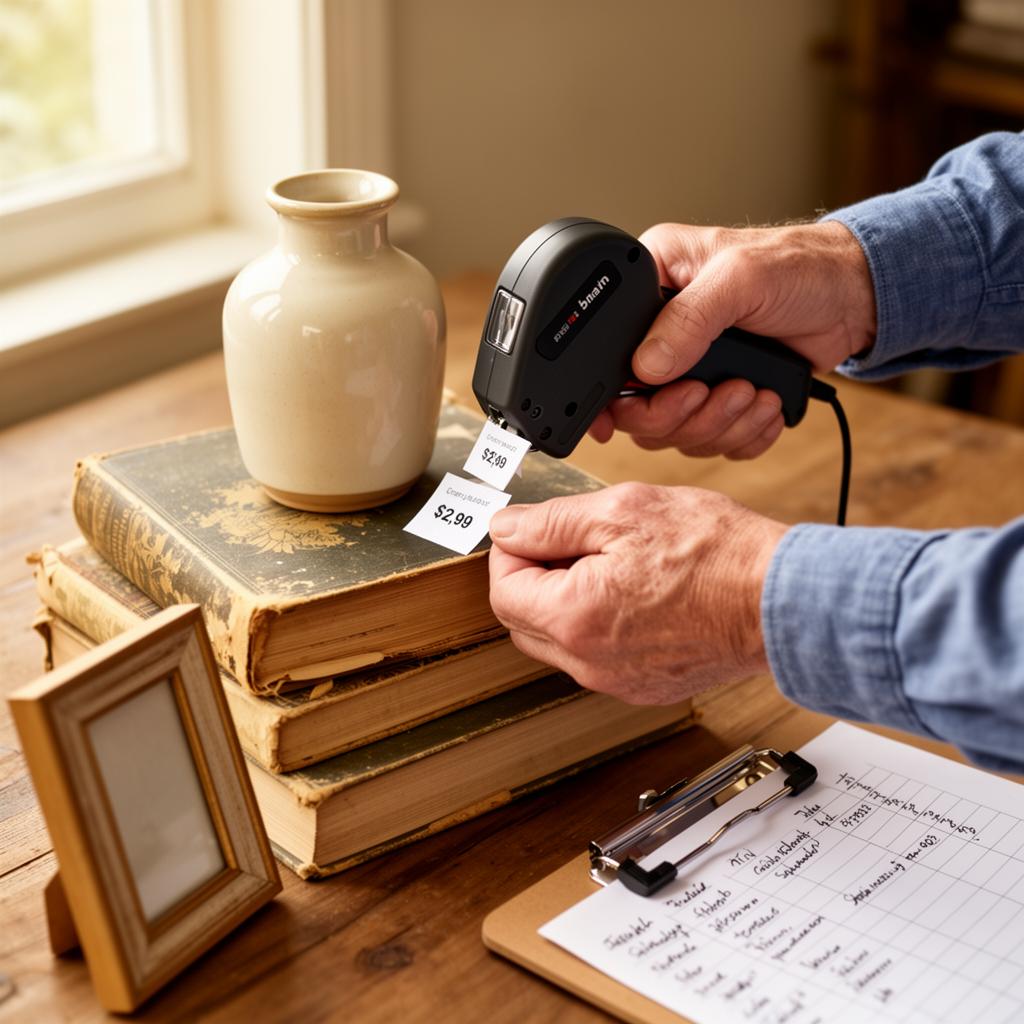
- •Use clear signage. Print prices with pricing guns or large stickers — handwritten tags look amateur and reduce perceived value.
Week 4
Advertise
- •Post on EstateSales.net (free consumer listing).
- •Post on Craigslist's "garage sales" section.
- •Post on local Facebook Marketplace and Buy Nothing/community groups.
- •Place 3–5 signs at major intersections within 1–2 miles the morning of the sale.
- •Photos matter. Good photos of 10–15 signature items (not everything) drive most of the early traffic.
Week 5 (sale weekend)
Run the sale
- •Two-person team minimum, three is better.
- •One person at the door (greeter, payment), one roaming for pricing questions, one for larger items and carry-out.
- •Accept cash and Venmo/Zelle/CashApp. Credit card readers (Square) are worth the 2.6% fee for larger purchases — buyers spend more with cards.
- •Day 1 is priced at asking. Day 2 is 20–30% off. Day 3 (if you run one) is 50%+ off or "make an offer."
Week 6
Cleanup
- •Remaining items: donate to Goodwill/Salvation Army (schedule pickup a week in advance), call a junk removal service, or both. See our guide on junk removal after death.
What sells well and what doesn't
| Sells well | Sells poorly |
|---|---|
| Tools (hand tools, power tools, garden tools) | Mass-produced 1990s–2010s furniture |
| Kitchenware (Pyrex, cast iron, stand mixers) | Adult clothing (outside vintage) |
| Vintage / mid-century items | CDs, DVDs, VHS |
| Collectibles with provenance | Paperback books in bulk |
| Sterling silver, real jewelry | Bulk china sets |
| Musical instruments | Exercise equipment |
| Firearms (legal compliance required) | Mattresses and box springs |
| Art with signatures | Encyclopedia sets |
| Christmas/holiday decor | Generic wall art |
| Coins, stamps, collected sets | Printer/computer peripherals |
The biggest mistake in DIY estate sales is over-pricing the unsellable and under-pricing the valuable. The second biggest is assuming old = valuable. Age alone is not worth money; provenance, rarity, and condition are.
Pricing rules you can apply immediately
- Most household goods: 20–40% of current retail. A $120 new toaster sells for $15–$30 used, not $60.
- Furniture: 30–50% of original retail OR $50–$300 per piece, whichever is lower. The used furniture market has collapsed. Don't ask 1998 prices.
- Books: $0.50–$2 for paperbacks, $2–$8 for hardcovers unless rare.
- Clothing: $2–$10 per item unless vintage/designer.
- Tools: 40–60% of retail for items under 5 years old, $5–$30 for older working tools.
- Kitchenware: 20–50% of retail for name brands, $0.50–$5 for generic.
- Anything you can't identify: photograph it, Google image search it, check eBay sold listings. If you can't find a comparable in 5 minutes, price conservatively ($5–$25) and let it go.
Frequently asked questions
Data and guidance on this page informed by:
- • National Estate Sales Association (NESA)
- • American Society of Estate Liquidators (ASEL)
- • EstateSales.net published industry benchmarks
- • 2026 survey of 12 U.S. estate sale companies
- • Consolidated interviews with 4 estate sale company owners (April 2026)
You May Also Find Helpful:
Estate Sale Companies Near Me
Compare the top 5 estate sale company networks in the U.S. — including what to watch for when vetting local companies.
Read →What to Do With a Deceased Loved One's Belongings
The broader framework for deciding what to keep, what to sell, what to donate, and what to release.
Read →Junk Removal After Death
For what doesn't sell at the estate sale — honest pricing and a 5-company comparison for the cleanup phase.
Read →